
This morning’s London newspapers have reported another twist in the tale of John Cairncross, the fifth member of the Cambridge spy ring whose true story was revealed at this blog two months ago.
However, as is typical of today’s understaffed and trivial newspapers, all three of the main ‘quality’ Fleet Street papers have missed the real story, and The Times is worst of all, printing an obvious lie.
What today’s story does prove beyond doubt is that I was correct to point to Cairncross’s involvement with mysterious arms dealing networks during the Spanish Civil War as being the core of his initial work for Soviet intelligence.
Superficially, today’s revelations are merely a romantic tale, linked to a National Archives exhibition titled ‘Love Letters’ that will open this weekend.
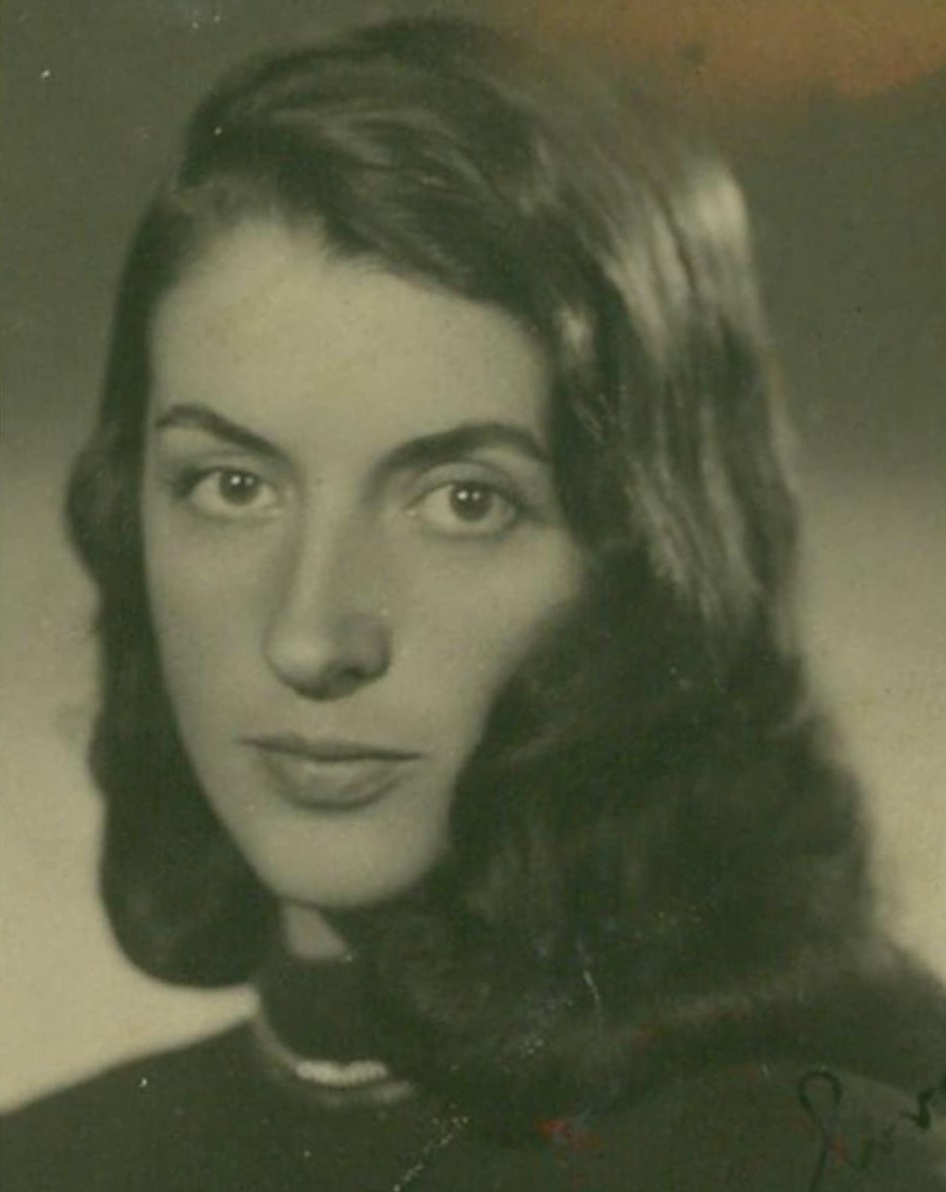
An elderly academic called Tom Brass, who happens to be married to a senior official at the National Archives, has revealed that his mother Gloria was (before the Second World War) John Cairncross’s mistress. Dr Brass discovered this romance after his mother’s death in 2012, when he found letters inside her copy of Cairncross’s autobiography.

Most of this morning’s newspaper reports predictably concentrate on romantic babbling that tells us little of historical value – and they obscure a story that potentially adds significant new details to the Cairncross case.
Gloria Barraclough and John Cairncross began their affair in 1937, judging from the recently discovered letters, but the significance of this date is misunderstood by ill-informed reporters.
The most ridiculous travesty is in this morning’s Times report by Kate Mansey, who writes: “It is thought Cairncross and Barraclough’s romance lasted for three to four years and began when she was 21 and he was 24 and they were both working at the British Institute in Madrid.“
Rubbish on both counts! Cairncross never worked in Madrid. From 1936 to 1940 he worked at the Foreign Office in London; then as private secretary to Lord Hankey (a minister responsible for several intelligence-related matters); then – most famously – for the codebreaking organisation at Bletchley Park in 1942-43; and for MI6 from 1943-45.
His mistress Gloria Barraclough y Valls, born in 1916, was the daughter of an English father and a Spanish mother. Her father Sam Pearson Barraclough (1867-1957) was a Yorkshire-born businessman who in 1912 founded the British Chamber of Commerce for Spain in Madrid, and was its secretary for 35 years, also founding a branch of the same organisation in Barcelona.
Gloria’s mother Luisa Valls Tarrago (1878-1957) was the daughter of a successful artist Pedro Valls (1840-1885), best known for designing and painting backdrops for opera and ballet productions at Barcelona’s Teatro del Liceo – known in Catalan as the Teatre del Liceu – and Madrid’s Teatro Real.

At the start of the Spanish Civil War, Gloria and her family – her parents and two brothers – fled to England, not as political refugees (if anything her father was probably like most of the business elite sympathetic to the insurgent Nationalists) but simply to escape the war.
If we accept that Gloria’s affair with Cairncross didn’t start until 1937, they might somehow have met in connection with his work for the Foreign Office section dealing with Spain. He was transferred to this department c. March 1937, where he was at first working with his fellow spy Donald Maclean.
It’s fairly certain that the Foreign Office would have had dealings with Gloria’s father, since although he was 70 years old by this time and in exile, he had many years of high-level connections in Madrid. But as a very junior official, it seems unlikely Cairncross would have been dealing with him. Since we know that both Cairncross and Gloria had literary and artistic interests, it’s more likely they would have met socially. (In a few weeks time I shall be writing about an important British and Soviet intelligence connection to artistic circles in Spain, which might also prove relevant to this story.)
However, the mystery is why this should have been kept secret for so long. There was nothing inherently scandalous in their relationship: neither was married at this time – Cairncross didn’t marry his first wife until 1951, and Gloria didn’t marry until 1945 (and neither of them would even have known their future spouses at this stage). Had their connection been purely romantic, there would have been no special reason to conceal it for so long (even posthumously). Had MI5 known about it, they would certainly have sought to interview Gloria (especially since by the time of their Cairncross investigations in the 1960s and 1970s she was living in England).
As I’ve previously explained, there are many mysteries about Cairncross’s travels during the summer and early autumn of 1936, between taking his final exams at Cambridge and joining the Foreign Office. We know that he spent some time in Europe, travelling via Paris to Germany, but during his many interviews with MI5 officers trying to piece together the story of his recruitment by the Russians, Cairncross seems deliberately to have obscured his links to Comintern operations, including the earliest plans by Moscow to influence the Spanish left and arm the embattled Republic.

It’s now known that Cairncross had connections to the international socialist/communist scene as early as his pre-Cambridge years studying in Paris at the Sorbonne, 1932-34, where he was already part of the anti-fascist network Giustizia e Libertà led by the Jewish-Italian Carlo Rosselli. By 1936-37 he was a natural recruit to a Europe-wide network of arms businesses and couriers created by the Soviet intelligence officer Walter Krivitsky, who later defected and tried to reveal some of this story before his mysterious death in a Washington hotel room in February 1941.
Another important European contact (with family ties to elite circles in Spain who could easily have known Gloria and her family and introduced her to Cairncross) was Etienne Temboury, a Parisian lawyer who was a close friend of Cairncross at Cambridge during his final year, 1935-36.
It was partly via Temboury that Cairncross was put in touch with Victor Haefner, an exiled German anti-fascist who was a key operative in the Comintern network (including many Jewish arms dealers such as Haefner’s partner Antonius Raab) created to arm the Spanish Republic.
Cairncross first dealt with Haefner in 1937 (around the same time, it now seems, that he began his affair with Gloria Barraclough). Haefner was working in Paris for the Comintern-controlled Spanish arms purchasing commission, and using a Spanish passport in the name Juan Maria de la Bellacasa.
Beginning in 1937, Haefner worked with Cairncross on finding ways to circumvent the British government’s embargo and get arms to Madrid for the Spanish Republic. It’s certainly a remarkable coincidence that (as we now learn) Cairncross began an affair at this time with the daughter of one of the most influential British businessmen in Madrid!

While in other circumstances it would be strange for their affair to have been kept secret for more than eighty years, it very much fits the pattern of Cairncross seeking to play down the extent of his involvement with Spain. It took many years for MI5 even to establish the basic facts about this side of his life, and as late as the mid-1970s MI5 and MI6 officers were still scouring Europe trying belatedly to reconstruct the true story of the Comintern’s arms-dealing networks. They eventually concluded that the accepted version of Cairncross’s recruitment was a lie, and that his Spanish business connections were absolutely fundamental to his work for what became the KGB.
Hence it’s not possible to accept the superficial romantic tale that the National Archives and the Fleet Street press are trying to tell us today. There are undoubtedly further details in MI5 and Foreign Office files relating to these matters, and they should now be published.
We should also be told more about the nature of Gloria Barraclough’s work after she returned to Madrid with her family in 1940 and began working at the British Embassy. It was there that she met Denis Brass, whom she married in 1945.
Brass was the British Council’s music officer in Spain and Portugal, and seems to have had at least one intriguing connection to the intelligence world. In 1943 he escorted the actor Leslie Howard on his visit to Spain and Portugal, and according to Brass’s obituary he put Howard and his manager Alfred Chenhalls onto their plane home from Lisbon, which was famously shot down by the Luftwaffe over the Bay of Biscay, killing all on board.
It’s now known that Howard had an important intelligence role, and his manager Chenhalls also had several links to the secret world (his sister Joan Chenhalls was a senior MI5 officer for decades). Also travelling on the same plane and killed was Wilfrid Israel, an Anglo-German Jewish businessman who was intimately involved both with MI6 and Zionist intelligence networks.
Denis and Gloria Brass were posted to Vienna during the early Cold War in the late 1940s and early 1950s, before Denis left the diplomatic world and became a full-time academic teaching Spanish and Portuguese literature at Bristol University. Gloria became a local councillor for the Labour Party.
Another close family connection to the espionage world was via her younger brother Fabio Barraclough, who served with British Naval Intelligence during the Second World War, and by his own account later for MI5 and/or MI6. Again, it’s possibly significant that simultaneously Gloria was at the British Embassy in Madrid, where Naval Intelligence officer Alan Hillgarth was running some of the most mysterious operations of the Second World War, notably with the ‘businessman’ and international gangster Juan March.
We only have very fragmentary information about Gloria’s work in this period, so all we can say for now is that it’s certainly a remarkable coincidence that she was the mistress of an important Russian spy, whose work was intimately involved with Spanish arms deals, while also being the daughter of the best connected British businessman in Madrid; that her brother was also involved in the intelligence world and (at least tangentially) so was her husband; and that for five years she herself worked in a so far unspecified role at an Embassy which was on the frontline of some of the most mysterious British intelligence operations of the entire war.

Gloria’s brother Fabio continued to be involved in the secret world for decades. In the 1970s he became Professor of Fine Arts at the University of the Witwatersrand in Johannesburg, and under cover of pretending to be a radical liberal artist, was secretly working for the apartheid-era security police.
Fabio Barraclough was right-hand man to one of the apartheid government’s most notorious spies Craig Williamson in ‘Operation Daisy’. He created two trust funds in South Africa where naive Western liberal charities sent money thinking it was benefiting the anti-apartheid cause, but which in reality were controlled by the security police.
He was also given a fake identity by South African intelligence. Using a passport in the name Pedro Valls (actually the name of his and Gloria’s long dead grandfather) he travelled to anti-apartheid conferences in Europe during the 1970s and 1980s and was still in touch with those circles until his espionage role was exposed at the end of the 1990s. Fabio Barraclough then went into hiding in Spain, where he died in 2019, aged 96.
How much did John Cairncross know about the espionage role of his mistress’s brother? Are we to assume it was simply an amazing coincidence that Gloria Barraclough was the mistress of a spy and the sister of a spy?
For that matter, how much of the international trickery and financial chicanery of the South African security police and intelligence service was truly designed to maintain apartheid – and how much of it was actually designed to ensure that Verwoerd’s original apartheid policy was undermined and succeeded by a regime compliant with the shadiest networks of international capitalism?
There’s a great deal we still don’t know – bearing in mind that the Cairncross-Barraclough connection has only just now started to be told.
But what’s already obvious is that it deserves far more critical examination than it is getting from the superficial romantic twaddle being peddled today by the National Archives and their friends in Fleet Street newspapers.


