
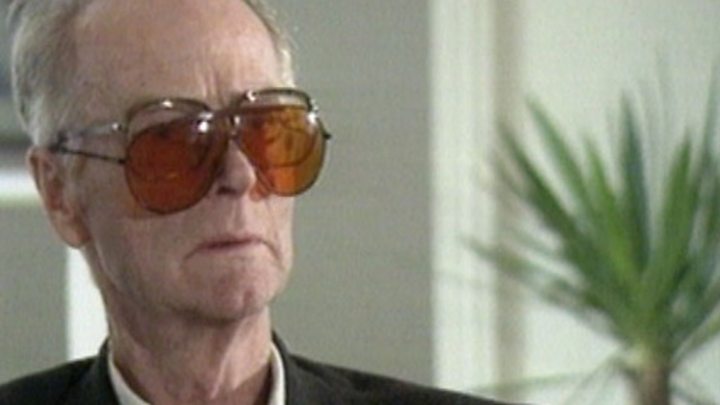
As discussed in the first part of this story, John Cairncross can now be seen as an example of what KGB defector Anatoliy Golitsyn described as an essentially Jewish background to the Cambridge spy ring. This specifically Jewish aspect to Soviet subversion in the West has been secret since Golitsyn’s defection in 1962, and is assessed with its full implications for the first time in a series of articles here at this blog: beginning with John Cairncross.
During the late 1950s and early 1960s MI5 continued to take a moderate interest in John Cairncross as they weren’t satisfied they had been told the whole truth, but they didn’t feel any need to prioritise his case.
Cairncross had been forced to resign from the civil service in 1952 as part of the fallout from the Burgess-Maclean investigation, once MI5 realised that thirteen years earlier he had supplied political intelligence to Burgess.
Yet for almost a decade after his resignation, with Cairncross living abroad and working for UN agencies based in Rome and the Far East, he was only of mild concern to the UK security authorities.
His case started to move up the agenda in 1961 due to his brother Alec Cairncross being appointed as an economic adviser to Harold Macmillian’s Conservative government. Early in 1962 the Cabinet Secretary himself, Britain’s most senior civil servant Sir Norman Brook, raised the matter with Alec but the latter adopted a truculent attitude, insisting he wouldn’t answer questions about his brother and that he was fairly sure John would refuse to be interviewed.
In the summer of 1962 yet another Jew entered the picture, though this time very far from being a communist. MI5 intercepted a letter to Gaby Cairncross from one of her London friends telling her that an old acquaintance of John’s, the Hungarian émigré economist Peter Bauer, would be giving a lecture in Rome and would very much like to meet up with Gaby and John for dinner. Bauer was two years younger than Cairncross but had been his exact contemporary at Cambridge. He was later to become a prominent figure on the ‘right-wing’ of economics in the Thatcher era.

MI5’s interest in Cairncross quickened considerably around this time, mainly because of the intelligence obtained from KGB defector Golitsyn at the start of 1962 about a ring of five spies. If this ring involved Burgess, Maclean, and three others, then it (belatedly) began to seem obvious that Cairncross was a possible suspect, since MI5 already knew for certain that on at least one occasion (in the spring of 1939) he had provided Guy Burgess with detailed political intelligence, and they knew he was at least slightly acquainted with Donald Maclean (sufficiently to have invited Maclean to one of several parties that he gave after his marriage to Gaby in 1951).
This was very far from being proof that Cairncross was a serious, high level Soviet agent – but it was sufficient to warrant further investigation. The problem of course was that Cairncross was no longer resident in the UK, so MI5 could only question him if he voluntarily submitted to an interview.
An opportunity turned up providentially at the end of 1963 when MI5 learned that Cairncross was applying for a US visa and was intending to take up a teaching post at a university in Ohio. James Angleton – the CIA counterintelligence chief who was Golitsyn’s main champion – suggested this would offer a chance for MI5 to interrogate Cairncross on US soil (with FBI and CIA cooperation).
There was a slight legal complication, in that even if Cairncross confessed this might not be admissible in a UK court, but in reality MI5 had no interest in prosecuting Cairncross. They naturally wished to avoid all publicity: if Cairncross confessed the priority would be to obtain as much information from him as possible, so as to gain a clearer picture of the scale of KGB penetration and track down any Soviet agents who were still in a position to cause damage.
On 16th February 1964 Arthur Martin confronted Cairncross at the Commodore Hotel, Cleveland. Martin had already planned to visit the USA around this time so as to liaise with the FBI and CIA about the implications of yet another confession linked to the Cambridge spy ring.
This time the confessed spy Michael Straight was an American from a wealthy family: his stepfather was the English philanthropist Leonard Elmhirst who founded the ‘progressive’ school and rural project Dartington Hall. Straight had close links with the British left (including communists) during a pre-Cambridge year at the LSE (1933-34) and throughout his time at Cambridge (1934-37) but was later to claim that it was only after the death of his Cambridge friend, the iconic communist John Cornford, killed in battle in Spain in December 1936, that he was approached by Blunt to become a Soviet agent and agreed.

Straight had continued working for the KGB after returning to the USA in 1937 and became one of numerous Soviet assets inside the Roosevelt administration, first in the Department of the Interior and from 1940-42 in the State Department. The full extent of his espionage work for the Russians is still disputed.
In the summer of 1963, Straight was offered the highly prestigious post of chairman of a new Advisory Council on the Arts being created by the Kennedy Administration. He was worried that a consequent FBI background check would expose him, so he decided to pre-empt this by making a full confession in June-July 1963.
During this confession, Straight named Anthony Blunt as having been his KGB recruiter. Within days the FBI passed on this information to MI5, and during the second half of 1963 MI5 steadily built up evidence on the possibility that Blunt and Cairncross were the fourth and fifth men in the ‘ring of five’ identified by Golitsyn.
During January 1964 Arthur Martin was already planning to visit the USA to interview Straight – it was therefore convenient for him to meet Cairncross during the same trip. In the event he met Cairncross at the Commodore Horel, Cleveland, on 16th February, and Straight at the Statler Hotel, Washington, on 26th February.
Cairncross admitted having been a Soviet spy from 1936 to 1951, but because this confession was made under the “inducement” of MI5 having promised to intervene with the US authorities on his behalf, he could not be prosecuted in the UK without a further statement made under caution to a British police officer.
After his 1964 confession, MI5 interviewed Cairncross another dozen times across almost a decade – throughout this period he was living abroad, mainly in Italy, but occasionally visited the UK having been assured he wouldn’t be arrested.
It’s perhaps significant that when he confronted Anthony Blunt in London two months later – at Blunt’s flat above the Courtauld Institute on 23rd April 1964 – Martin first mentioned Straight’s confession, and Blunt tried to bluff it out, saying that Straight’s story was “pure fantasy”. It was only after Martin went on to explain that a few weeks earlier he had obtained a confession from Cairncross, that Blunt (after a long pause) made his own confession. Martin didn’t suggest that Cairncross had implicated Blunt in any way, and all Blunt said about Cairncross during his confession was that he was aware (because Burgess had told him) that Cairncross had been recruited but was not part of Burgess’s network.
Some accounts have suggested that Blunt was being disingenuous here – but it now seems likely that he (and by extension Burgess) were telling the truth: i.e. that Cairncross, contrary to his own statements, was not recruited by Burgess or Blunt, and that he had been drawn into the Comintern’s secret network previously and via a separate process. In other words that Cairncross was not the Fifth Man but in some ways (at least chronologically) the First Man, and that the central motive force behind all of the recruitments was not personal friendship, homosexuality, social connections or any of the other well-worn tropes, but the essentially Jewish networks of the Comintern in this period.
It later became fairly obvious that yet again, Cairncross hadn’t been fully frank with MI5, but as with Jim Skardon back in 1952, Arthur Martin was easily convinced that he had obtained the whole truth this time. Martin wrote: “I do not feel any doubt that he has told the whole truth. He is not a good liar as his earlier interrogations showed. It seemed to me that as his story unfolded I could watch the weight lifting from his mind.”
Cairncross’s new story was that he had begun to move in left-wing circles during his second year at Cambridge (1935-36) and had frequent conversations about politics with leading student communists, notably James Klugmann. He claimed not to remember having joined any student political society and said that during this period he didn’t know either Burgess or Maclean. He knew Blunt (who was by this time a junior don at his college) but didn’t “move in his circle” – by which Cairncross was understood to mean first that Blunt was senior to him, and second that (unlike Blunt) he wasn’t a homosexual.

Cairncross said that soon after he joined the Foreign Office in September 1936 he was contacted by Klugmann who told him he had been selected to do special work for “the movement” and introduced him to “Otto”, i.e. Arnold Deutsch, who was his first Soviet intelligence controller.
He admitted that at first his work for Deutsch was ideologically motivated but claimed this soon faded, and that he only continued working for him because Deutsch had threatened to expose him. Though at this early stage this might not have meant a long prison sentence it would certainly have meant the end of Cairncross’s Foreign Office career and the end of his gainful employment.
Cairncross said that in his early days at the Foreign Office he met Donald Maclean for the first time, but had no idea that Maclean was a fellow Soviet agent. At about the same time as Cairncross transferred from the Foreign Office to the Treasury in 1938, Deutsch suddenly disappeared. It’s now known that Deutsch was recalled to Moscow in September 1937 as part of Stalin’s purges and possibly as a direct consequence of the defection of fellow Jews and NKVD spies Ignace Reiss and Walter Krivitsky. Reiss wrote personally to Stalin in July 1937 announcing his defection and was murdered by NKVD assassins a few weeks later in Lausanne, on 4th September 1937.
Krivitsky (a close friend of Reiss since childhood) defected the following month, having been NKVD rezident in The Hague since May that year and co-ordinating a Comintern network throughout Western Europe. Krivitsky survived in Paris, in close touch with Trotskyist and other dissident Marxist circles, for a year before sailing to the USA in late 1938. During the following months he worked with fellow dissident Isaac Don Levine to produce a denunciation of his former masters, published in serial form by the Saturday Evening Post in April 1939, and as the book I Was Stalin’s Agent in November that year.
Note that these defections and publications mostly preceded the Molotov-Ribbentrop Pact. There were other disputes between Stalin and the Jews, partly connected to his split with Trotsky in 1926-27, but also with tensions within the Comintern that led to a break between Stalin and some non-Trotskyist Bolshevik Jews in 1936-37. Naturally this had an effect both on deep cover Comintern agents such as the Cambridge spies, and on the Jewish arms dealing networks that were part of Krivitsky’s Comintern operations arming the Spanish Republicans.

Cairncross claimed to his MI5 interrogators that these parallel developments – the disappearance of Deutsch and his own transfer to the Treasury – led him to think he might be off the hook and that the Russians would stop pressuring him. In fact even at the basic factual level he was being disingenuous. Deutsch was recalled to Moscow in September 1937, and plans to transfer Cairncross to the Treasury didn’t start to be discussed until July 1938 with the actual transfer happening on 1st October (i.e. just over a year after Deutsch left London).
According to Cairncross, several months passed before the NKVD got back in touch via Guy Burgess, whom he had met socially a few times since their Cambridge days but whom (as he lied to Martin) he previously had no reason to think of as a Soviet agent.
This work via Burgess started in 1938 and lasted until early in the war: it included the period in March-April 1939 when Cairncross submitted those handwritten reports on Whitehall political gossip that had been the sole evidence against him during his first interrogation in 1952. Whereas Cairncross had then pretended that the 1939 reports were a one-off occasion helping Burgess with anti-appeasement political intelligence (without any notion that this was being passed to the Russians) he now (in his 1964 ‘confession’) admitted that it formed part of conscious spying on his part dating from late 1936 or early 1937 until 1951, soon after the Burgess-Maclean story broke, when the Russians themselves had ceased contact.
After his enforced departure from the Treasury in 1952, Cairncross had used an agreed emergency procedure for triggering a meeting with a Russian contact, leaving a chalk mark at a pre-arranged spot near Westbourne Park tube station.
He claimed that his work for the Russians had petered out in the latter stages of this fifteen-year espionage career, but admitted that in practice this had continued in some form until spring-summer 1951 and in theory until April 1952 (in that Cairncross had attempted to contact the Russians at this latter stage but they hadn’t responded).
Soon after this confession, MI6 made an initial damage assessment concluding that Cairncross probably hadn’t done them serious damage during his two years with the service, June 1943 to June 1945. Though in 1943-44 he was in Section V where Philby was considerably more senior, MI6 accepted there would have been certain matters specifically concerning Germany where Cairncross would have been able to betray secrets that weren’t known to Philby (given the latter’s primary focus on Iberia). [For more on this, see Part I of this article.] Nevertheless even those matters would only have been relevant during wartime, MI6 concluded: “It is improbable that much, if anything, of which he had knowledge during his period survived to be of significance in the post-war years.”
The Prime Minister Sir Alec Douglas-Home was briefed about the Cairncross case on 19th February 1964 by the Cabinet Secretary, Sir Burke Trend. This is very different to the way the Blunt case was handled – probably because there was a residual fear that Cairncross (given that he was based overseas and had little reason to fear prosecution) might after all prove awkward and publicise his case, or even (at worst) defect to Moscow. MI5 didn’t have the leverage over Cairncross that they had over Blunt, who had a position to lose (both socially and financially) in London, and who in theory might still fear prosecution if he failed to cooperate.
Moreover there were potential embarrassments for Douglas-Home’s government on several counts, especially given the unfortunate record on security matters that had plagued the final year of Macmillan’s government. Cairncross’s brother Alec was a senior economic adviser in Whitehall, and even aside from that, there might be criticisms of earlier Conservative administrations for failing to follow up previous suspicions with sufficient vigour. All of the serious but inadequate investigations of Cairncross had occurred under Conservative governments, starting under Churchill in 1952.
In a later minute to the Prime Minister (on 6th March 1964, after Cairncross had specifically refused to return to the UK and submit to further interrogation) Trend spelled it out: “we have to ask ourselves what would be the probable result, in terms of public policy in the widest sense, if it became known that the Government were employing, as their Chief Economic Adviser, a man who was the brother of a self-confessed Communist spy. This is a harsh and crude way of putting it; but that is how, I fear, it could, and probably would, be represented.”
On balance therefore Douglas-Home was quick to accept Trend’s recommendation that Cairncross’s case (like Philby’s) was not suitable for reference to the new Security Commission and was unlike such cases as the Profumo scandal – which had led to an inquiry under Lord Denning – because it didn’t seem to relate to any continuing security threat.

For whatever reason, Trend also hinted that the British authorities wouldn’t want to go down the route of prosecuting James Klugmann, even though Cairncross had named Klugmann during his confession as having been responsible for his recruitment. This might have been because MI5 wanted to prioritise the possible intelligence benefits of pursuing various leads who might clam up in the event of prosecutions; but there might also have been a broader embarrassment related to Klugmann’s own role with SOE during the war, stationed in Cairo with responsibilities affecting Britain’s subversive warfare against the Axis in the Middle East and Balkans.
By 1964 Klugmann was approaching his 52nd birthday and was editor of the CPGB’s journal Marxism Today. He was known to be working on a history of the CPGB and was thought to have spent most of his adult life on work for the party rather than on clandestine pro-Soviet work.
As we shall see, at the end of the 1960s MI5 decided it might be useful to try to use Cairncross as a lever to push Klugmann into making a confession, but this scheme failed.
During the summer of 1964 another MI5 officer Derek Hamblen carried out further interviews with both John and Alec Cairncross. On balance he decided that Alec’s security clearance shouldn’t be withdrawn, which meant he continued to be one of the government’s most senior economic advisers until his retirement in 1969.
Aside from his brother’s admitted role as a Soviet spy, the main security concern about Alec personally was in 1952 when he attended an economic conference in Moscow. Many (though not all) of the organisers were communists and fellow travellers, and soon after his return to the UK Cairncross joined some of these on the executive committee of a new British Council for the Promotion of International Trade (BCPIT), which was particularly focused on building up British trade with Red China.
Hamblen noted on the file that one of the central figures in this BCPIT was Roland Berger, a Jewish communist who had a long record of covert communist activity. In practice Alec Cairncross said he had little involvement with the Committee’s affairs beyond receiving its publications and his name being on their letterhead. He claimed that in 1955 he wrote to resign from the Committee, though it was possible that they continued to use old notepaper with his name on it for another year or so.
He admitted to Hamblen that his decision to stand down from BCPIT was because he thought it might cause him trouble in obtaining a US visa, but he stubbornly argued with Hamblen that in his view BCPIT had only been trying to promote East-West trade in a sensible and moderate fashion. On balance Hamblen felt that Alec Cairncross should be given the benefit of any lingering doubt and his positive vetting clearance should be renewed. He showed signs of residual leftism but more in a naive and otherworldly academic sense, compounded by stubbornness, than anything more sinister.
Meanwhile John Cairncross’s 1964 confession was for several years accepted by MI5 at face value.
Yet even a cursory glance at Cairncross’s file should have confirmed to any competent MI5 investigator that his background was consistent with Golitsyn’s notion that there was something Jewish about the ring of five Cambridge spies.
It wasn’t immediately certain that Cairncross was one of these five, but he certainly did have Jewish associations and an admitted espionage role (though he tried to minimise it). Most obviously, his wife (like Philby’s first wife) was a Jewish immigrant – indeed she had worked for a Jewish refugee organisation in London. By Cairncross’s own admission, one of the most prominent Jewish communists of his generation – James Klugmann – had directly prompted his recruitment as a Soviet spy.
Moreover, though Cairncross was keen to play this down as much as possible (and it wasn’t until the early 1970s that MI5 began to realise just how suspicious this was) Cairncross had links to Jewish arms dealers as early as 1937 who were part of Comintern networks arming the Spanish Republicans. It’s difficult to be precise because Cairncross kept changing his story, but we can say that his first contact with the arms dealer Victor Haefner was (at the latest) around the same time as his first meeting with his Soviet controller Arnold Deutsch, i.e. early 1937. Indeed (as I mentioned in Part I of this article) it’s likely that these Comintern connections predated this recruitment by Deutsch and even predated Cairncross’s graduation from Cambridge and appointment to the Foreign Office in 1936. In some form they dated back to his time in Paris at the Sorbonne in 1932-34.

In other words, Cairncross’s recruitment as a Soviet agent was rooted in his connections to European anti-fascism – as was Philby’s recruitment following his adventures in Vienna in 1933-34. If we examine the case via the prism of Golitsyn’s remark about Jews, we should be looking not (as some authors have) at overt Cambridge communists of the older generation such as Maurice Dobb and Roy Pascal, or mid-1930s activists of the younger generation such as Cornford and Klugmann, but in the first instance at European Jews involved in anti-fascist and later anti-nazi movements, such as the Italian Jewish brothers Carlo and Nello Rosselli who founded Giustizia e Libertá in exile in Paris in 1929 and influenced Cairncross at the Sorbonne; and the Viennese Jewess Litzi Friedmann whose involvement with International Red Aid and other Comintern fronts led her lover and future husband Kim Philby into undercover communist work and paved the way for his recruitment as an NKVD spy.
Both Cairncross’s and Philby’s introduction to continental anti-fascism (in Paris and Vienna respectively) occurred in 1933-34, and in Cairncross’s case perhaps even earlier, in 1932-33. If that’s true, then it potentially makes Cairncross the first man rather than the fifth. If he began some form of Comintern work as early as 1933, this might even have predated Philby’s work with undercover Viennese communists.
The question would then be: when was Cairncross converted from undercover anti-fascist to long-term NKVD/KGB agent, and what exactly was the line between one and the other?
It took MI5 nine years to begin seriously doubting Cairncross’s 1964 confession and to start looking at such questions, and by that time it was too late for them to reach definite answers.
During his interviews with Arthur Martin after his April 1964 confession, Anthony Blunt gave several contradictory versions of Cairncross’s recruitment. He settled on the notion that both he and Burgess had ‘talent spotted’ Cairncross and given his name to a Soviet diplomat in London who was then their NKVD controller.
The outcome was that both Blunt and Burgess became aware at some stage that Cairncross had been recruited, but Blunt had no further dealings with him save for hearing occasional comments from Burgess, usually reflecting on Cairncross’s bad nervous state. Blunt had the impression that Cairncross was a rather tortured character and the pressures of spying left him sometimes “in a terrible state”.
This fitted with Martin’s view (which for several years became an MI5 orthodoxy before being seriously revised) that Cairncross found life as a spy “much too difficult” and had been happy and relieved to make a full confession to Martin.
While Blunt was interviewed intensively on many occasions throughout the 1960s, first by Martin and then by Peter Wright and others, Cairncross was mostly left alone following the three interviews in Ohio during February-May 1964. He was effectively booted out of the US and returned to work in Rome and elsewhere for UN agencies.
In August and December 1965 Cairncross was interviewed again (in Rome and then in Paris) but MI5 accepted his sometimes muddled answers as loss of memory or embarrassment rather than calculated evasion.
Having tricked Jim Skardon in the 1950s and Arthur Martin in the mid-1960s, by the late 1960s Cairncross also bamboozled (at least for a while) the leading molehunter Peter Wright, who wrote several times in the late ’60s that despite inconsistencies in his accounts, Cairncross seemed to be sincere.
One regular trick used by Cairncross, Blunt and the Rothschilds in their interviews with MI5 was to point the finger at people who were safely dead: an example was in a May 1969 interview when Cairncross gave further details about the former diplomat Paddy Costello (who had died in 1964 and who by this time was already known to have been a Soviet agent).
He also emphasised and perhaps exaggerated the communist sympathies of another Cambridge contemporary, the Canadian diplomat Herbert Norman, who had repeatedly come under scrutiny during the McCarthy era and committed suicide in 1957. Yet he played down the extent of (for example) Jenifer Hart’s communist commitment.

Hart was a postwar Oxford academic who at the start of the war was private secretary to the top civil servant at the Home Office, Sir Alexander Maxwell, and had access to a wide range of secret files. Her Jewish husband Herbert Hart (later Oxford’s most senior law professor) was an important wartime MI5 officer.
Unlike the people Cairncross happily identified, the difference of course was that Hart and her Jewish husband Herbert were still alive and a serious investigation into their pre-war and wartime connections would potentially have unravelled an Oxford spy ring that had just as many (if not more) Jewish connections than the Cambridge ring. Cairncross also tended to play down the communist tendencies of Jenifer Hart’s brother-in-law David Hubback.
Hubback was a senior Treasury civil servant related to Britain’s grandest Jewish families – the Montagus, Samuels and Sebag-Montefiores. His mother was the pioneering feminist Eva Hubback (née Spielmann), and his grandfather was the educationalist and art collector Sir Meyer Spielmann. He married Jenifer Hart’s communist sister Judy Fischer Williams.
MI5’s various interviewees during the 1960s and early 1970s pointed them in opposite directions as to the extent of Hubback’s pre-war Marxism, but MI5 eventually concluded that he had indeed been an undercover party member during the 1930s. His own MI5 file has not been released to the National Archives. It’s an extraordinary fact that during some of the most serious financial crises in British history – the successive currency crises of 1966-68 – there were two such senior Treasury officials who were under MI5 scrutiny: Alec Cairncross and David Hubback.
We don’t yet have the MI5 personal files on either of them, but we know that Alec Cairncross was the brother of a Russian spy and David Hubback was the brother-in-law of a Russian spy. In the case of Hubback he was himself an undercover communist (for several years, at least) and if there was (as Golitsyn suggested) a core Jewish element to both Cambridge and Oxford spy rings in the 1930s and 1940s, Hubback would surely have been close to the top of the list of MI5’s suspects.
As early as December 1965 MI5 was considering using Cairncross as part of an ambitious scheme to “break” one of the most important Jews in the British Communist Party – James Klugmann. Four volumes of MI5 files on Klugmann have been released to the Archives but these end in the 1940s: there are clearly many more volumes still to be released, and later information on Klugmann has to be pieced together patiently from many other files.
It’s not entirely clear why MI5 felt that this lifelong communist might be persuaded (or forced) to talk frankly to them, but it’s fairly obvious that his Jewishness was part of that picture. They hoped that Cairncross would help them in persuading Klugmann to make a confession, not so that he could be prosecuted but so that other potential Soviet spies in Britain could be tracked down.
They didn’t expect Klugmann to abandon his Marxist faith, but they did hope he might separate this from what they hoped would be his fading faith in the Soviet Union. Bear in mind this was at a time when Eurocommunists were beginning to break from the Moscow line, and Jews in particular (even some Marxist Jews) were starting to disagree overtly with the Kremlin.

The most interesting example of this – only mentioned very tangentially in the published files (and so briefly that it would be easy for non-specialist historians to miss the references) – was Leopold Trepper, organiser of the partly Jewish spy ring in wartime Europe known as the Rote Kapelle (Red Orchestra).
Trepper had been arrested on arrival in the Soviet Union in 1945, for reasons related to internal KGB tensions, and was imprisoned for a decade. Soon after his release he moved to Poland but during 1967-68 the communist government there (and throughout the Soviet bloc) seemed to be moving towards forms of “anti-semitism” and Trepper was one of many prominent Jews who began the process of trying to emigrate from the Soviet bloc to Israel.
In Trepper’s case he accomplished this move to Israel in 1974, but during 1973 there are references in the Cairncross file to MI5 hoping that Trepper would talk to them. Did he? And if so, what did he reveal? Again, these are absolutely vital files on the relationship between communism and international Jewry, and it’s to be hoped that MI5 will soon publish them.
In November 1973 a very senior MI5 officer, writing to Bill Pratt about plans to travel to France and interview Cairncross’s pre-war Comintern contact Etienne Temboury, noted that Pratt would “no doubt be waiting to see whether Trepper is able to answer any of the outstanding questions in this area before fixing up your journey, which has my approval.”
This is a tantalising fragment of what is clearly a very important story. For at least five years (1965-70) MI5 had built an entire operation – Operation Acre – around targeting another important Jewish communist, James Klugmann: an operation that failed in December 1970 when Cairncross was brought to London to confront his old friend.
MI5 seem not to have risked bugging the confrontation, so they only had Cairncross’s word for it that he had made a genuine attempt to persuade Klugmann to meet with MI5, but that Klugmann had refused.
This failure coincided with (or perhaps triggered) a turning point in MI5’s attitude to Cairncross, partly because at almost exactly the same time they discovered that Cairncross was involved in a complicated financial dispute with an international fraudster. He and a longstanding friend – an Englishwoman named Gillian de Cent – had each lost more than £30,000 to this fraudster.
There are hints in the files that Mrs de Cent (née Gillian Weatherdon) had herself had connections to wartime British intelligence services: what’s certain is that she was interned in wartime Italy and was involved in an extraordinary trek by escaped British prisoners of war during the autumn of 1943.
Redactions from the Cairncross file might relate to MI6 interest in Mrs de Cent. She seems at some point in the 1950s to have been a friend of Donald Hiss, brother of the Soviet agent in the US State Department, Alger Hiss, and in the 1950s her husband was British military attaché in Vientiane, Laos.
What we do know is that from the moment they found out about the alleged fraud, MI5 began to look more sceptically at Cairncross. They knew that he wasn’t from a wealthy family, and they knew that he had a decent job with the UN/FAO but not a fantastically lucrative one, even when supplemented by income from other translation work (for example for literary publishers and the BBC).
So how had Cairncross obtained sufficient funds to be able to make highly speculative investments to the tune of £30,000? This was the 1970 equivalent of what today (in 2025) would be over £400,000.
Hilariously (given the many well known frauds associated with Nigeria) Cairncross and Mrs de Cent appear to have been conned into investing in schemes to deal in Nigerian oil. It’s perhaps significant that several international Jewish gangsters as well as the infamous Kray twins (who dominated East London’s organised crime scene for much of the 1960s) were similarly involved in Nigerian oil frauds at this time. Scotland Yard had a longstanding file (dating back to 1950) on the fraudster at the centre of the case.
Part of Cairncross’s investment involved £10,000 in Italian currency [the equivalent of £140,000 in 2025] which MI5 suspected was money that in some way he had accumulated out of sight of the Italian tax authorities. Again the question was – how did a man of ostensibly modest income and relatively humble family background accumulate this sort of money?
MI5 decided there was “something very odd indeed about Cairncross’s financial dealings”, and that “presumably it is just possible that the capital in part represented an accumulation of Russian intelligence service pension, or even perhaps payment for some current work.” Given that (by his own account) Cairncross had been out of touch with Soviet intelligence since (at the very latest) 1952, this raised troubling questions.

Having previously been favourably impressed by Cairncross, his case officers Patrick Stewart and Peter Wright were forced to change their mind after interviewing him again in London in January 1972. They reported that Cairncross was “concealing something of importance from us. He lied about his financial affairs, and his woolly story about his property transactions seemed deliberately designed to obfuscate the issue.”
Once doubt set in, this was bound to spread to other aspects of the case, leading to “the suspicion that the money which he acquired to purchase his property (and out of which he has been swindled) was given to him by the Russians – and that his confession was agreed to or connived at by the KGB.”
MI5 consulted their MI6 colleagues (whose reactions are still redacted from the file) as well as Angleton at the CIA. Angleton shared the most alarmist interpretation – that Cairncross’s confession in 1964 had been “a put up job” designed to obscure or distract from the real picture of Soviet subversion, and that MI5 would be fully justified in reopening the entire Cairncross case from a more sceptical standpoint.
This reopening of the case produced a lead that MI5 didn’t fully understand but which (for reasons I will examine in a later article) I find very significant indeed. As far back as the 1940s it seemed that Cairncross had involved himself in illegal currency dealings and in black market whisky transactions. MI5 thought this was merely evidence of dishonesty – but I have good reason to believe it was also evidence of Cairncross having connections to seriously subversive Zionist networks. (Again, this will be explained in a later article.)
There were other apparent financial discrepancies in Cairncross’s affairs during his work as a British civil servant and intelligence officer in various departments from 1936-52.
His work since 1952 – beginning with occasional translation work and journalism; then a series of UN jobs from the mid-1950s to 1960; three or four years as a management consultant in Rome; a very brief academic post in the USA in 1964; and renewed UN/FAO work since 1964 – wouldn’t seem to have offered much opportunity for accumulating vast amounts of capital.
In addition to the money he lost in the fraud (which seemed to have begun in 1967), MI5 discovered Cairncross had been involved in at least two other large scale financial transactions: the purchase of an olive grove in Tuscany in 1969, and the purchase of land on the island of Capri which was to be developed for a villa.
In September 1972 the case was handed over to Stella Rimington, then a 37-year-old rising star in MI5’s counter-espionage section, who twenty years later was to become the first female head of MI5. (Stella Rimington died in August 2025, aged 90.) From autumn 1972 she worked on the Cairncross case together with Bill Pratt, who was a specialist in historic research into the pre-war Cambridge and Oxford communist scene that had provided rich soil for KGB recruitment.
In January 1973 they interviewed Cairncross for two and a half hours at an MI5 facility in Whitehall: this meeting was Cairncross’s idea but MI5 suspected he was trying to discover whether he had fallen under renewed suspicion. What he got was a pretty hostile grilling, with Rimington and Pratt making fairly clear that they now doubted whether his past nine years of supposed confessions and cooperation had been honest.
They were suspicious of his finances and also now began to suspect he had been recruited by the Comintern long before the August-October 1936 period that his statements broadly indicated.
The most disturbing potential implication was spelled out by Pratt and Rimington: were the two key points in the uncovering of Cairncross’s espionage – the discovery of papers in his handwriting among Burgess’s belongings in 1951, and the events leading to his own fuller confession in 1964 “elements in a complex controlled pattern following the defection of Burgess and Maclean? If so, how do they fit into the larger and later aspects of what is possibly the same pattern reshaped post-KAGO [i.e. after Golitsyn’s defection in 1961] which could have included the sequence of events leading to Philby’s defection; Straight denouncing Blunt; and after Cairncross’s ‘confession’, that of Blunt himself?”
If so, some of the key events in the Cambridge spy ring’s history would have to be reinterpreted as being part of an attempt to disguise the true story and point MI5 away from important aspects of Comintern subversion in the UK.

Pratt and Rimington tried to reinvestigate the crucial period of August 1936: the period between Cairncross leaving Cambridge, sitting the Foreign Office entrance examination, and obtaining his first Foreign Office post.
Cairncross chose to spend those weeks in Berlin, travelling via Paris (where James Klugmann was by that time established running a Comintern liaison office during the early weeks of the Spanish Civil War).
At the end of a fairly hostile January 1973 interview Cairncross promised that he would be back in London in a few months time and he would submit to a further interview, having had time to set out in writing a clearer explanation of some of the inconsistencies that were now troubling MI5. Meanwhile Pratt and Rimington sought further information by interviewing secret MI5 contacts linked to Cairncross’s wartime work, as well as sources with knowledge about his pre-war French friend Etienne Temboury.
Over two days in late April 1973, Pratt and Rimington questioned Cairncross again for a total of seven and a half hours, but on most of the substantive issues Cairncross took refuge in mere assertions that MI5’s information was incorrect.
One very important aspect that was belatedly re-examined was Cairncross’s involvement in arms deals. He was for the first time shown MI5’s copies of intercepted letters between the arms dealers Haefner and Raab which specifically mentioned Cairncross providing them with “original papers” from inside the Foreign Office and made mysterious references to a bank account in Valencia and a possible financial reward for Cairncross.
He insisted that Haefner was simply lying on these matters and that his admitted connections with Haefner during 1939 had been for “purely patriotic motives” because he thought Haefner might indeed have scientific information beneficial to Britain.
Pratt noted however that by this point in the interview, there was “no doubt he was a very worried man.” By now, MI5 were no longer fooled by Cairncross’s pretence that he was an otherworldly academic and only a fringe figure exploited by more experienced communist operatives. Pratt concluded:
“This case is one of considerable importance. It is adding a new dimension to our thinking on the Russian intelligence service exploitation of the intellectual in the 1930s – particularly in highlighting the significance of Europe rather than of Cambridge. Although there were periods during the interrogation when he was clearly in considerable emotional distress, his interrogators were left with the impression of a totally amoral man but also of a man as tough as whipcord.”
A few days after these April 1973 interviews, Rimington added a note to the file based on her study of the Krivitsky case including his pre-war book I Was Stalin’s Agent, where he described his organisation of arms shipments from European countries to Republican Spain during the Civil War.
According to Krivitsky, Stalin had decided in August 1936 to intervene in the Civil War by aiding the Republicans, but also that this aid must be unofficial and handled covertly. Krivitsky was placed in charge of the foreign end of the operations, and used a network of agents to create a system for buying and transporting arms to Spain.

He was under orders to ensure that it would not be possible to detect any Soviet hand in this arms traffic. On 21st September 1936, Krivitsky’s head agents met in Paris. “They decided”, Rimington summarised, “that all cargoes must be handled privately through business firms created for the purpose. They established a chain of import-export firms in various European cities but the difficulty was to get licences for shipment of the arms to Spain. Their first plan was to consign them to France and trans-ship them from there to Loyalist ports but they could not get clearance papers from the French Foreign Office. Another way was to secure consular papers from overseas governments certifying that the arms had been purchased for import into their countries. Krivitsky was able to secure large numbers of certificates from certain Latin American consulates and with these he obtained clearance papers from the countries of origin of the arms. Then, instead of the ships going to South America, they went to Loyalist Spanish ports.”
Krivitsky wrote that the men at his disposal for this network included members of various societies and front groups associated with overseas Communist parties – organisations such as the Friends of the Soviet Union, and the various groups titled “League for Peace and Democracy”. Both OGPU/NKVD and GRU tended, he said, to look on such groups as “reserves of civilian auxiliaries of the Soviet defence system.”
As Rimington concluded, “Krivitsky’s account seems to make nonsense of Cairncross’s claim that his 1937 involvement with Haefner and Temboury in an attempt to cause arms to be shipped to Spain, and his involvement in 1939 with Haefner, Raab and the Greek arms firm of AEKKA had nothing to do with his work for the Russian intelligence service.”
Over the next two months Rimington carried out an in-depth investigation of the Cairncross case, eventually compiling a detailed report that she sent to her bosses on 10th July 1973.
“The sudden unexpected shift of our questioning to Haefner and the arms deals,” Rimngton wrote, “a subject on which he had not been interrogated in detail since 1951, supported as it was by documentary evidence he did not know we had, took him completely off balance. He had no story ready to tell and he had to retreat into amazed innocence and loss of memory, even though, for example over the bank account in Valencia or the anonymous letter, he knew we found that attitude incredible. He will probably try hard to find some explanation which fits his story and the evidence he now knows we have, but if he cannot do so he will have no recourse but to continue to protest his amazement and innocence.
“I now feel reasonably certain that there is a considerable area of the story of his espionage that Cairncross has kept from us but we can still only guess what the truth is. It seems likely that the key to his case may be that he was not, as we have thought previously, an ideological spy of the traditional ‘Ring of Five’ type, recruited at or shortly after Cambridge and placed as a penetration agent in a Government Department, but rather a completely different animal, a mercenary spy whose basic links were in Europe.
“Some of the puzzles in Cairncross’s case might be solved if he originally became involved in espionage in Europe in the early 1930s, doing jobs of some sort for money, and his introduction to ‘Otto’ by James Klugmann, coming over from France for the purpose, was in fact a recontact rather than a first approach. His story that he agreed to work for Otto not out of ideological commitment but because of fear would certainly make more sense if Otto threatened to reveal to the Foreign Office that Cairncross had already done some spying and been paid for it.
“It may well be that the anonymous letter and Cairncross’s connection with Haefner and Raab, of which the documents we have give only tantalising glimpses, rather than being some inexplicable incidental to the main story as Cairncross maintains, are in fact the main story; that his work was in fact as a paid agent of a European-based ring assisting with the procuring of arms to Spain, acting as a postbox for information out of Germany, etc., and not as an ideological penetration agent in the Foreign Office. If this were true it might explain the various conflicting stories of Cairncross’s recruitment, why Blunt said he was not part of Burgess’s main network, and also provide a reason why Burgess had to obtain money for him when he gave him an assignment in 1938.
“This version of the story is considerably more sordid and squalid than the one Cairncross told and we accepted in 1964. If it were anything like the truth it would not be surprising if Cairncross were unwilling to admit to it now.”
“Sordid”, “squalid”, “mercenary”: these were the adjectives Rimington used to contrast her new interpretation of Cairncross with the traditional view of the Cambridge spies as convinced Marxists – i.e. ideologically driven 1930s converts.
She could just as easily have echoed Golitsyn more precisely by writing that Cairncross and perhaps other members of the Cambridge ring of five were linked in their anti-nazism by “something Jewish” rather than by strictly Marxist ideology.

Beginning as early as 1942, MI5 had repeatedly missed signs that Cairncross was a more serious spy than he pretended to be, and they had only begun to take his Jewish arms dealing connections seriously when re-examining the case in the early 1970s. Due to the painstaking work of Rimington and Pratt, he was caught out in several inconsistencies regarding dates. The fact that Temboury had mentioned his name to Haefner suggested that the Cairncross-Temboury connection was far less innocent than Cairncross had pretended.
During the first fortnight of March 1937 Cairncross had taken a period of leave, just before starting work in the Spanish department of the Foreign Office. He had spent those weeks in France, and very lkely it was at this point that he mentioned his new job to Temboury who then immediately put him in touch with Haefner.
MI5 discovered that after this holiday, Cairncross had made no fewer than six further trips to France during 1937-38. Each time he had a period of leave, Cairncross spent that time visiting France. While he had portrayed this simply as a reflection of his interest in Franch culture, it also happened to coincide with the period when Paris was the main centre of Soviet intelligence activity covering the whole of Western Europe, especially the war in Spain.
On 31st August 1939, just days before the outbreak of the Second World War, Haefner had written to his arms dealing partner Raab, a German-Jewish émigré based in Athens. The letter was phrased obliquely but evidently referred to Cairncross working for their network and obtaining “original papers”. By this time the Spanish civil war was over, but Haefner and Raab continued to be part of the Soviet intelligence network identified by Krivitsky.
Around the same time, another document later found among Haefner’s belongings mentioned Cairncross in connection with a secret bank account in Valencia.
Adding these and other fragments of evidence together, Rimington was convinced there was a great deal more to Cairncross’s work for the Russians than he had so far admitted, but given the passage of time she thought it unlikely that MI5 could bring sufficient pressure on him to extract the truth. Sadly she concluded that MI5 “gave away the first game in this match when we believed the first story he told in 1964 and we allowed him to consolidate his victory from then until 1970 by continuing to treat him as a friend and an honest and reliable source.”
During 1973-74 as their agenda became clouded by domestic and international complications that brought the politics of paranoia to boiling point, MI5 almost pieced together the European facets of the Cairncross case, only to decide by the end of 1974 that there was now nothing they could do.

Instead of being a late and rather halfhearted recruit who got out of the espionage game as quickly as he could, might Cairncross have been one of the first of the Cambridge spies to be recruited, and the one who stayed in the game longest – for perhaps four decades or more?
The new version taking uncertain shape in MI5’s mind would go something like this.
Cairncross had first been attracted to leftwing ideas while at Glasgow University in the early 1930s, and had made strong contacts with Comintern operatives while at the Sorbonne during 1932-34. By the time he arrived at Cambridge in 1934 he had already in a sense been recruited and slipped easily into the developing Soviet intelligence ring there.
After taking his finals and the Foreign Office entrance exam, Cairncross had spent the summer and early autumn of 1936 in Europe, travelling to Germany via Paris so that he could make contact with James Klugmann who was already running a Comintern operation there, and soon becoming part of the Soviet-controlled arms dealing network that again was based in Paris as well as in the Netherlands.
The reason he was pretending to be so confused as to the precise chronology of his meeting in Blunt’s Cambridge rooms involving Burgess and others, his introduction by Klugmann to his first Soviet controller in London, and the supposedly aborted liaison with Burgess in Paris, was that all of these had not been tentative steps towards recruitment, but part of a pattern of activity that had already begun several years earlier at the Sorbonne. His connections to the Parisian lawyer Temboury and the German émigré arms dealer Haefner were not concidences, but were very much connected to this work for the Russians and in some ways predated the notional date of his recruitment.
If one accepted this reasoning, it was logical to conclude that Cairncross had been a far more important spy that MI5 had hitherto realised – from his earliest days at the Foreign Office in 1936 to his continuing efforts to bamboozle MI5 in the mid-1970s, ending only when they lost faith in him and broke off contact.
A full picture of Cairncross’s espionage could only be obtained by a full confession (which never happened), but the picture would have to include:
- assisting Soviet efforts to obtain permits for arms deals intended for the Spanish Republicans, while Cairncross was in the Foreign Office department dealing with Spain in 1937;
- working with Soviet intelligence networks inside Germany during 1937-38, as indicated by the unexplained misdirected letter dated 5th August 1938 and posted from Amsterdam, referring to mysterious events in Germany;
- helping Haefner and Raab with further arms dealing matters in 1938-39;
- enabling Haefner to make his way to England in 1939 and putting him in touch with military experts in London;
- providing the Russians (via Guy Burgess) with political intelligence from conversations with well-placed Whitehall officials in early 1939 seeking to undermine Chamberlain’s peace policy and push Britain further towards war with Germany;
- handing over high-level intelligence from Lord Hankey’s office during 1940-41, including details of reorganisation of the British security and intelligence services, and some of the earliest political decisions on what became the nuclear bomb project;
- revealing the secrets for which Cairncross became best known, during his time at Bletchley Park, including decoded German messages that helped the Russians win the Batle of Kursk as well as assisting other military operations on the Eastern Front;
- late in the war providing secrets from within MI6 concerning important changes inside the German intelligence service, including the decline of Canaris and the Abwehr and the growing power of Himmler and the SS, Moscow’s most feared enemies;
- using his continuing postwar connections in Whitehall to help Soviet intelligence during the early Cold War, including trying to find out the extent to which the West had broken Soviet codes, and dealing with the consequences of the first Western discoveries about the Cambridge ring;
- playing his part during the 1950s and 1960s in misdirecting MI5’s spycatching efforts, especially at the moment of greatest peril for the KGB and the pre-war Comintern Jews, following Golitsyn’s defection in 1962;
- most disturbing of all, perhaps, staging a ‘confession’ in 1964 as part of a KGB plan to distract from some form of continuing subversive network.
Bill Pratt noted that Cairncross’s attempt to defend himself with his angry July 1973 letter to MI5 showed that he was “seriously frightened and is striving to play down the importance of those aspects of our interrogation which caused him most concern.”

During August 1973 the Cairncross investigators Pratt and Rimington had several meetings with Peter Wright, MI5’s senior molehunter and longstanding ally of both Golitsyn and his CIA mentor Angleton. Meanwhile Wright had also used his web of contacts to seek cooperation from French and German security services in tracking down some of Cairncross’s contacts.
The reinvestigation also included a warrant to open the mail and tap the phone of Cairncross’s ex-wife Gaby, a Jewess who was still living in North London. It seems that MI5 deliberately delayed their next meeting with Cairncross because they wanted to piece together as much new evidence as possible from their various sources (including in France, Germany and Italy).
By November 1973 Bill Pratt was planning to visit France and interview Cairncross’s pre-war friend Etienne Temboury, the Paris lawyer who was his initial link to the Soviet-backed arms dealer Victor Haefner and the undercover schemes to arm Spanish Republicans.
In connection with this planned interview, Pratt’s superior at MI5 John Allen mentioned that he would first wish to see how interviews with the wartime spy Leopold Trepper developed.
This is a mere fragment of what remains an almost entirely hidden story. Trepper was the legendary leader of the Rote Kapelle (‘Red Orchestra’), a large-scale Soviet spy network across wartime Europe reaching into the Third Reich itself. Yet he had spent 1945-55 in Soviet prisons after coming under suspicion and being repeatedly interrogated by his KGB masters. On his release in Khrushchev’s USSR, he tried to advance a plan for reviving Russian Jewish institutions and when this failed after the famous 20th Congress in 1956, he returned to live with his family in Warsaw, where he ran a Jewish cultural society. In 1967 the Polish communist leadership took an anti-Zionist turn in response to the Six Day War, and Trepper found himself in disfavour and for a time under house arrest. At this point he applied to emigrate to Israel, but while communist Poland allowed and encouraged thousands of their Jews to do this during the 1967-68 period, Trepper was refused permission. A worldwide campaign then began, and eventually Trepper was given permission, emigrating to Israel in 1974.
This newly released MI5 document is the first we have heard about Trepper meeting with Western intelligence, and we don’t even know whether he met with them directly or via Mossad. We do know that Allen wrote to Pratt on 19th November 1973 that before questioning Temboury and the Jewish arms dealer Antonius Raab about Cairncross, Pratt would “no doubt be waiting to see whether Trepper is able to answer any of the outstanding questions in this area before fixing up your journey.”
Also on 8th November Pratt’s immediate superior Peter de Wesselow minuted his agreement to a list of proposed questions for Temboury, but added that a final question asking about the Rote Kapelle “may need modification if Trepper talks.”
Did Trepper talk? And if so what did he say about specifically Jewish connections to communist spy rings in 1930s and 1940s Europe? We don’t know, because aside from fragments, the history of these interviews remains secret.

In March 1974 Stella Rimington made an important discovery in Foreign Office archives, proving that Cairncross had been lying when he claimed that in 1937 he had been totally ignorant of and uninvolved in British policy towards the Spanish civil war.
In fact a great deal of Cairncross’s work in 1937 involved the controls set up to prevent arms supplies to Spain, linked to the Non-Intervention Agreement. One of his immediate Foreign Office superiors, Evelyn Shuckburgh, spent much of his time on this question of arms supplies that breached the Agreement.
For example, on 12th July 1937 Cairncross himself minuted on a file about the Non-Intervention Conference. He noted that the barrister Robert Crawford Hawkin – an expert on international law who was secretary of the International Arbitration League – had called at the Foreign Office on 10th July with a proposal for drawing up a federal constitution for Spain. Hawkin’s idea involved bringing together two English lobby groups – the Friends of Valencia and the Friends of Franco. He thought that most non-communist Spaniards (apart from those under heavy Italian influence) would accept this federal idea.
Hawkin also suggested that the Foreign Office should take up a Portuguese diplomat’s suggestion that the Portuguese and Spanish speaking republics of South America should be brought into the work of the Non-Intervention Committee.
On 15th July a further minute was added noting that a Mr Millard of the US Embassy had telephoned the Foreign Office, reporting that Hawkin had also been in touch with them, and wondering what importance the Foreign Office attached to his idea.
On 11th July Hawkin wrote to the Foreign Secretary (from his home address at 28 Gunterstone Road, Barons Court) and referring to his conversation with Cairncross.
For some reason MI5 don’t seem to have picked up the fact that Hawkin was Cairncross’s landlord! Cairncross and one of his friends from the Sorbonne, Eric Wagstaff, with whom his brother Alec went on a walking holiday in Germany in 1936, each had rooms at Gunterstone Road during 1936-37 as Hawkin’s lodgers.
Cairncross’s connection to Robert Hawkin – with whom he discussed high level policy initiatives related to Spain and whose house he lodged in during 1936-37 – is another completely new twist in the story that is reported here for the first time.
It tends to contradict the prevailing view of Cairncross as a man from a humble background without high-level connections. Hawkin was a Liberal barrister with elite political ties dating back to Edwardian England where he had been secretary of the 80 Club, a high-level network in Asquith’s Liberal Party before the First World War. By the late 1930s British politics had moved on and Hawkin (by now in his mid-60s) had far less influence, but he was still a potentially important contact for a very junior Foreign Office employee starting to make his way in Whitehall.
Soon after this discovery proving that Cairncross had a hitherto undisclosed, extensive interest in the Spanish civil war during his Foreign Office work in 1937, Rimington went to Paris to meet French security officials and prepare for MI5’s interviews with two of Cairncross’s old associates, the lawyer Temboury and the Sorbonne academic Raymond Picard.
It seems that an MI6 representative was also present, though in line with standard archival practice this is redacted from the file. The French indicated that they would have to take care in handling Picard because official “relations with the Sorbonne, both students and staff, were rather sensitive”.
The French authorities did however manage to interview Temboury in Paris a few weeks later. While he admitted having been leftwing in his youth – and even having made a three-week official tour of the USSR in 1930 or 1931 with two friends – and having been a pupil of a communist barrister in Paris (André Berthon) in 1936-37, Temboury maintained that his friendship with Cairncross had been social and cultural, linked to a circle of language students who met at the house in Cambridge where Temboury lived during 1935-36.
He claimed (falsely) that he hadn’t seen Cairncross since leaving Cambridge at the end of the academic year in June 1936 and returning to France. When Cairncross visited France in about February 1937 he had stayed with Temboury’s parents at a villa they rented in Cannes, but Temboury said he was at that time busy in Paris preparing for his bar exams, so he and Cairncross supposedly didn’t meet.
When questioned, Temboury remembered that Haefner had been one of Berthon’s clients, but he didn’t indicate any knowledge of any connection between Haefner and Cairncross. The French officials concluded that Temboury had seemed apparently frank in his answers but “extremely agitated, both apprehensive and opportunist”.
For whatever reason, the French and the British failed to pursue any more aggressive interview with Temboury. Perhaps one aspect was that the British didn’t want to alert any wider communist network to the fact that they now doubted Cairncross’s confessions.

In June or July 1974 Peter Wright seems to have had a further discussion with Golitsyn (the name is redacted from the file) about certain aspects of the Cairncross story, and a final MI5 interview with Cairncross on 20th November 1974 was conducted by Philip Osmond and Wilson Morgan. They began by focusing on a series of payments he had received from the Russians over the years, some as reimbursement of expenses and others as gratuities, and many of which he had at first been reluctant to admit.
All told, this final interview was a damp squib, especially compared to the progress that Pratt and Rimington had made 19 months earlier. Osmond and Morgan concluded that Cairncross had probably been little more than a mercenary spy who was probably even now not telling the truth about the extent of his connections with the pre-war arms dealers Haefner and Raab, but they felt it was unlikely that at this late stage an intensive re-investigation would be worthwhile, unless and until some new reliable source emerged.
In once again relegating Cairncross to a lower level than the other four Cambridge spies, this final interview missed an opportunity to uncover important aspects of the Jewish dimension to the ring of five that Golitsyn had first pointed to back in 1962 during his earliest post-defection statements.
The entire story went quiet for the best part of five years until the Cambridge spy case exploded onto the world’s headlines in 1979 due to a book by former BBC journalist Andrew Boyle – The Climate of Treason. Evidently helped by conversations with anonymous retired spies on both sides of the Atlantic, Boyle not only rehashed the Burgess, Maclean, and Philby stories but also said there had been two other important spies whom he disguised under pseudonyms but who were easily identifiable to any well-informed reader.
One of those described by Boyle was so obviously Sir Anthony Blunt that the London magazine Private Eye defied libel laws by naming him, and a few days later Prime Minister Margaret Thatcher named him in Parliament.
Very oddly however, Boyle didn’t name Cairncross but instead identified the fifth man as Wilfrid Basil Mann, a nuclear scientist. It seems very likely that Mann was indeed a Soviet agent at some stage, but he wasn’t the fifth man in Golitsyn’s ring of five – that was definitely Cairncross.

The author and civil servant Sir John Colville (who had been one of the young Whitehall high-flyers whose pre-war conversations with Cairncross had been included in a dossier of poltiical intelligence passed to Guy Burgess in the spring of 1939) gave a Sunday Times journalist a lead that allowed Cairncross to be identified and named by that newspaper on 23rd December 1979.
On civil service advice, Prime Minister Thatcher declined to comment on Cairncross’s case other than to admit that he had resigned from the Treasury under pressure in 1952.
No official admissions were ever made by the British government about Cairncross, and even when some official documents on his case were released in 2015 and 2017 these were to some extent misleading, as of course is Cairncross’s own posthumously published autobiography.
The two biographies of Cairncross so far published (by Chris Smith in 2019 and Geoff Andrews in 2020) are although they contain much of value, similarly misleading in important respects – partly because they accept too much of Cairncross’s own account, and partly because they sometimes genuflect to ‘anti-fascist’ pieties.
Though there have been dozens of books and hundreds of newspaper articles about the Cambridge spy ring – which for a time in the mid-1980s following Peter Wright’s controversial memoir Spycatcher was a leading news item on television bulletins and newspaper front pages worldwide – It’s only now after close examination of 22 volumes of MI5 files on Cairncross released early in 2025 that a long overdue re-examination of the Cairncross case has become possible.
John Cairncross was an important Soviet agent. His anti-fascism and his Jewish connections were not an alibi for his espionage, or a positive aspect of his record that can be offset against his treachery: they were central aspects of that treachery.
As Golitsyn correctly warned more than sixty years ago, there was something Jewish about the Cambridge spy ring and its top-level penetration of the West. John Cairncross was one example of that Jewish aspect of 20th century subversion – and there were many more, as later articles in this blog series will show.

