
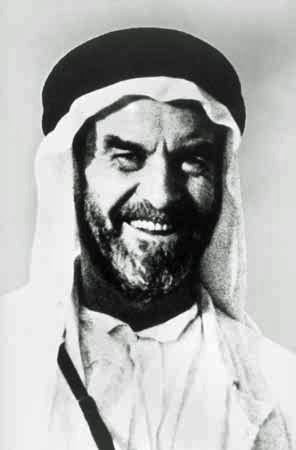
The Athenaeum on Pall Mall is one of London’s most exclusive clubs. Its six founding members included Humphry Davy and Michael Faraday – two of the scientists whose discoveries and inventions made Victorian England the workshop of the world – and Lord Palmerston, the greatest statesman of the mid-19th century British Empire.
Yet in the Athenaeum’s coffee room on 6th October 1939 – one month into a war that was about to bankrupt that Empire and wipe it off the map – five men were having one of the strangest and most secret discussions that even those august portals had ever witnessed.
Three leading Zionist Jews, lunching with two surprising friends. One of their lunch companions was a cantankerous Englishman, notorious for his pro-Arab sympathies, who less than three months earlier had been a parliamentary by-election candidate for an anti-war and ‘anti-semitic’ party. The other was this Englishman’s son, a shy and stammering young journalist who was to become the most infamous spy in history: Kim Philby.

Only one of the three Jews was an Athenaeum member – Lewis Namier, a 51-year-old Professor at Manchester University, who despite supposed ‘anti-semitism’ in the academic establishment had already become one of the most influential historians in England. His elder lunch companion (and at that time a close ally in the faction-infested world of Zionist politics) was Chaim Weizmann, 64-year-old president of the World Zionist Organisation.
The final member of the lunch party had travelled from Palestine: Moshe Shertok, 44-year-old head of the political department at the Jewish Agency, the body that represented Jewish interests in the British Mandate of Palestine.
Within a decade Weizmann would be President of the new state of Israel, and Shertok (after changing his name to Moshe Sharett) its foreign minister. But today over lunch at this haunt of the British elite, the three Zionists were a long way from obtaining power themselves. They were here to discuss plans for a much more cautious step towards a Jewish homeland: and their host was one of the British Empire’s leading experts on the Arab world.
54-year-old Harry St John Bridger Philby – known to family and friends as Jack Philby – was by this time right-hand man to Ibn Saud, the tribal chieftain who fought his way to pre-eminence in the Arabian peninsula and gave his name to the desert kingdom of Saudi Arabia. The 27-year-old Kim Philby – though lacking his father’s academic brilliance and domineering personality – had followed in his footsteps from Westminster School to Trinity College, Cambridge, before making his own way in journalism as Times correspondent attached to General Franco’s Nationalist forces in the Spanish Civil War.
Yet since the summer of 1934, Kim Philby had been working secretly for the Soviet Russian intelligence service – later known as the KGB. His presence at this lunch with some of the main creators of Israel wasn’t a coincidence, but what were the loyalties of this strangely assorted lunch party and what were their secret discussions as the tectonic plates of history shifted during the autumn of 1939?

At the end of last year I began a groundbreaking re-examination of the Cambridge spy ring – the world’s most famous espionage story. I exposed for the first time how a Soviet defector who way back in 1961 first revealed the existence of this now-legendary “Ring of Five” Moscow agents at the heart of the British establishment, had specified that there was something Jewish – “some Jewish background” – to this network.
Almost every other writer on this subject has (whether through ignorance or as a deliberate choice to censor the truth) ignored this vitally important fact.
Once the specific nature of the Jewish background to the mission of these Cambridge spies – Guy Burgess, Donald Maclean, Kim Philby, Sir Anthony Blunt, and John Cairncross – is properly understood, the intelligence wars of the 20th century (and the broader Cold War whose implications still cast a shadow over all of us today) can be seen in a new light.
That’s why this blog is examining each of the Cambridge spies in turn, and explaining in serious detail exactly why they fitted the pattern of a “Jewish background” described by KGB defector Anatoly Golitsyn, whose revelations rocked intelligence services on both sides of the Atlantic during the 1960s and 1970s.
Today’s episode in the story is perhaps the most relevant to events in 2026. While a US President notorious for his gross ignorance of history and geopolitics is wobbling through successive blunders in a regional war, we can now learn more about a much earlier effort to redraw the map of the Middle East.
This effort drew in President Franklin Roosevelt and Prime Minister Winston Churchill, the man whom Donald Trump constantly invokes in a cack-handed attempt to insult Churchill’s most recent successor Keir Starmer.
But the plan’s authors were an unlikely pair: Chaim Weizmann, Zionist leader who was later the first President of Israel; and St John Philby, the British Empire’s leading expert on the Arab world, whose son Kim Philby was to become the most notorious traitor in the annals of espionage.
*****

As I explained at the start of this series of articles, when he suddenly defected in December 1961 Anatoly Golitsyn was a 35-year-old major in the KGB, serving in Finland as head of anti-NATO counterintelligence at the Soviet embassy. Among the wealth of information he provided to his new CIA colleagues was that the traitors Burgess and Maclean (who had infamously fled to Moscow more than a decade earlier when Maclean was on the brink of exposure) were two of a “ring” of five spies, all of whom were known to each other, and that there was “some Jewish background” to all five.
We now know that the five were Burgess, Maclean, Philby, Blunt, and Cairncross (though for many years there was doubt as to whether Cairncross should be classed as part of the “ring”).
I‘ve detailed in my recent revelations about John Cairncross that there was indeed something specifically Jewish in his background – he was recruited as a Comintern agent in the 1930s initially as an ‘anti-fascist’ and an associate of arms dealers, not as an ideological communist.
Note that none of the five Cambridge spies was himself Jewish, though both Cairncross and Philby had Jewish first wives.
Philby’s first wife Litzi Friedmann – an Austrian Jewess – is an important figure in her own right in the history of Soviet espionage. As I revealed in May last year, her close contacts during the 1930s included Dr Heinz Roland, a Jewish émigré art dealer in London whose wife collected sexually compromising blackmail material against one of America’s most powerful bankers and bureaucrats, John J. McCloy (who was to become the first American High Commissioner in Occupied Germany from 1949 to 1952).
But in examining the reasons why the KGB should have regarded Philby as having some “Jewish background” – and why we can regard his activities during the 1930s as being Jewish espionage as much as Soviet espionage – we need to look first not at his wife but at his father.
St John Philby was (like his son) a rebel within the British establishment, though born in the British Raj – in his case Ceylon (now Sri Lanka) where his father was a tea planter. He was christened St John not for any religious reason, but because it was the name of the bungalow on a Ceylonese tea plantation where he was born. Never a pious Christian himself – even before converting to Islam aged 45 – he tended not to use this name in private life and was known to friends and family as Jack.
At the end of the 1930s and early 1940s, while Kim Philby was taking his first treacherous steps into the British intelligence service, his father was involved in an ambitious Zionist scheme to redraw the map of the Middle East. This scheme had no parallel until the Abraham Accords drawn up by Donald Trump, Benjamin Netanyahu, and their new Arab friends in 2020, which formed the strategic basis for US-Israeli aggression against Iran and Lebanon in 2026.
Many previous books about Philby have mentioned the Jewish businesswoman Flora Solomon, a leading Zionist activist whom the young Kim knew during the 1930s, and who in 1962 belatedly informed MI5 that Philby had in that earlier era been a Soviet agent.
As I shall explain in a later episode in this series, there are many mysteries about Mrs Solomon’s decision to inform on her former friend. But for the purpose of this article we need to examine the reasons why her fellow Zionist leaders in London would have found the young Kim such a valuable spy, long before he joined MI6.
Those reasons relate to the British Mandate in Palestine – authority over that former Ottoman territory granted to Britain by the League of Nations after the First World War – and broader British imperial policy in the region. Though he was very much a maverick, there were few if any better informed British observers of the Arab world than Kim’s father, St John Philby.
An intellectual high-flyer since his childhood at the elite public school Westminster, and at Trinity College, Cambridge, St John Philby became a servant of the British Empire at its Edwardian and post-Edwardian peak – first in India, then in the Middle East.
The big question for British politicians in that region was whether to support the family of Sharif Hussein of Mecca (installed as King of Hejaz in 1916 after backing Britain’s First World War effort), or to back the rising power on the other side of Arabia, Ibn Saud.

Hussein’s kingdom ran along the Red Sea coast in the west of what is now Saudi Arabia, including the port of Jeddah. During the second half of the First World War, as guardian of the Islamic shrines of Mecca and Medina, he was figurehead of the ‘Arab Revolt’ against Britain’s Ottoman Turkish enemies. In fact the Pan-Arab flag designed by the Yorkshire baronet and diplomat Sir Mark Sykes for that pro-British Arab Revolt, became the flag of Hussein’s short-lived kingdom in Hejaz, and is now the flag of Palestine – adorning the lapels of millions of woke leftists who are almost all unaware of its history.
Ibn Saud’s base was hundreds of miles further east and was built on a series of conquests by his desert warriors known as the Ikhwan, followers of the puritanical Wahhabi version of Islam. He conquered Riyadh in 1902, then in a series of bloody conflicts with rival chieftains extended his power from what is now central Saudi Arabia, as far as the region of al-Ahsa on the Persian Gulf coast, bordering what is now Bahrain and the British-backed ‘Trucial States’ (today’s Gulf monarchies).
The two great British Arabists of that era backed opposite sides. Oxford-educated T.E. Lawrence was famously a partisan of Hussein and a close comrade of Hussein’s son Faisal (as seen in the film Lawrence of Arabia). Cambridge-educated St John Philby, who was just three years older than Lawrence and never met him until the early 1920s, backed Ibn Saud, with whom he briefly served as head of a British liaison mission during 1917-18.
By the mid-1920s each of them had become disillusioned by the double-dealing of imperial elites in London, but while Lawrence withdrew to a solitary life under an alias, serving in the lowest ranks of the RAF until his death in a still-mysterious road accident in 1935, Philby quit the Colonial Service, walked out on his marriage to Kim’s mother Dora (though they never formally divorced), and moved to Arabia, where he became Ibn Saud’s trusted adviser.
In 1930 St John Philby went so far as to convert to Islam. And it was around this time that he began a very curious decade or more of political games with Palestinian and World Jewry.
In the autumn of 1929 St John Philby began discussions with Judah Magnes, a leftwing pacifist American Jew who since 1925 had been Chancellor of the Hebrew University of Jerusalem.

It’s important to understand that in this era, the Zionist movement was pursuing many different angles in its efforts to gain a foothold in Palestine. Most of what is written online (often by sincere anti-Zionists) is simplistic drivel. It isn’t true to imply that the British Empire handed over Palestine to be a Jewish state, built on promises in the Balfour Declaration in 1917 or (still less) the Sykes-Picot Agreement in 1916. In many ways during the inter-war years, events seemed to be moving in the opposite direction, and those scheming to advance the Zionist cause therefore used many different subterfuges.
That’s why Zionist intelligence services – long before the state of Israel – had a definite motive to work secretly with what we now know as the Cambridge spy ring. Not because Zionists controlled the British Empire, but precisely because they didn’t. Zionists feared that the British Empire was moving away from them, and that’s why they had to look for whatever angles they could (overt and covert).
Originally British policy in the Middle East was governed primarily by a continuing need to protect the jewel in the imperial crown – the British Raj in India. Today’s readers need to realise that this comprised not just modern India, but an entire subcontinent extending from the Afghan border to the Shan States of north-eastern Burma, bordering China’s Yunnan province. British ‘India’ included what are now seven separate nation states: Pakistan, India, Bangladesh, Sri Lanka, Bhutan, Nepal, and Burma/Myanmar – and its influence naturally extended even further in both directions across Asia and into what we now call the Middle East.
More broadly still, the First World War expanded the British Empire to its greatest ever size, even though the economic effects of the war had been disastrous.
Moreover, the strategic challenges of this post-1918 world were compounded by the Bolshevik Revolution making Russia again the existential threat it had been for much of the 19th and early 20th centuries under the Tsars. Not only was Russia in its latest Soviet iteration yet again a threat to British India, it also loomed over the chaotic postwar Middle East. This region was now a patchwork of ‘mandates’ granted during the post-1918 peace settlements under the new League of Nations to victorious Britain and France, carved out of the defunct Ottoman Empire; semi-independent bedouin tribes in its backward regions; and increasingly restive Arab nationalists in its culturally and economically advanced cities.
Perhaps now most important was the new factor: oil. Though private motor transport was still in its infancy and not an important political consideration, the Royal Navy – which was still by far the greatest maritime power in the world – had switched from coal to oil, beginning in 1911. The Empire’s oil supplies were heavily dependent on Persia (today’s Iran) where Britain took a majority stake in the monopolist Anglo-Persian Oil Company. Elsewhere in the Middle East, ambitious businessmen (often representing American companies) were chasing ‘concessions’ to explore possible new sources of oil.
Apart from Persia/Iran and certain parts of Iraq, most of those oil-rich areas that we know today were still (at most) hopeful prospects in the 1920s and 1930s. For example, though exploration had been taking place since the early 1920s, it wasn’t until May 1938 that oil was actually struck in Saudi Arabia, and it wasn’t until the 1950s that oil wealth began to transform Ibn Saud’s kingdom.

So it’s critically important for anyone seeking to understand this story to realise that Ibn Saud – though a forceful individual commanding a fearsome band of warriors – was at this point relatively cash-poor. Even after he defeated his rivals and established what’s now known as Saudi Arabia, his finances depended heavily on the pilgrim trade – Muslims worldwide travelling to the holy cities of Mecca and Medina. Therefore, from the point of view of World Zionism, there seemed a good chance that Ibn Saud could be bought.
From the British Empire’s standpoint, the question of Palestine was just one of several complications that they had to juggle. Quite aside from the question of Arabs v Jews, a more important consideration for British policymakers in the 1920s and 1930s was often Arab v Arab.
St John Philby favoured a policy of granting new, post-Ottoman, Arab states a large amount of independence. Again, it’s important to understand that (although associated with the Labour Party and other ‘progressives’, and described in 1932 by T.E. Lawrence as “rather a ‘red’; but decent – very”), this didn’t mean Philby senior was a Marxist or the equivalent of a 21st century ‘wokeist’. The British Empire always had operated through a combination of direct and indirect rule. For example the Raj where Philby spent his first years in colonial service, comprised some areas directly administered by Britain’s Viceroy and his staff, but also a diverse collection of native-ruled states and territories, where Indian princes were at least theoretically in charge, though under British influence and having sworn loyalty to the Empire.
The question with new Arab territories and nascent states was just how much ‘independence’ would they be allowed; and a related question was whether they would be a fissiparous range of kingdoms (or even republics), or an Arab federation of some kind. If the latter, then as the insightful Humpty-Dumpty observed in Lewis Carroll’s Through the Looking-Glass: “The question is, which is to be master – that’s all.”
Was the selected pro-British Arab hegemon to be one of Hussein’s sons – the so-called Hashemite dynasty? This was the view (certainly until the late 1930s) of the Foreign Office in London and the British Administration in Cairo (the people who had first sent Lawrence to lead the Arab Revolt): but even before he became personally involved in Arabia, St John Philby was part of the rival bureaucracy in the Raj, who were strongly opposed to Hussein and if they had to respect any putative Arab hegemon would rather look to Ibn Saud.
From as early as 1915, British imperial policy in the Middle East was a Cairo v Simla dispute (Simla being the summer capital of British India, and generally used as shorthand by other officials when referring to the government of the Raj). British policy in Arabia as well as Mesopotamia had traditionally been the preserve of Simla, but from the middle years of the First World War that began to change, with the key decisions being made in Cairo and London.
After defeating the Ottomans and as they attempted to shape a postwar order, the British first tried to impose Hussein’s son Faisal (Lawrence’s wartime comrade) as King of Syria: when he was forced out by a combination of local ‘nationalists’ and French agents, he was found an alternative throne in Baghdad ruling what was once called Mesopotamia but was newly christened ‘Iraq’.
Meanwhile Faisal’s younger brother Abdullah – two years after his humiliation in May 1919 at the hands of Ibn Saud’s desert warriors, when he had to flee his camp at Khurma and his army was literally cut to pieces – was installed as Emir of Transjordan (today’s Jordan). This was scarcely a nation at all, more a collection of bedouin tribes.
St John Philby spent the early 1920s as an unruly and unhappy colonial servant – first in Faisal’s capital Baghdad, then in Abdullah’s capital Amman, before his last and permanent resignation in April 1924. He spent the summer of that year back in England, where his 12-year-old son Kim provided some welcome good news for the family by winning one of the prestigious King’s Scholarships to Westminster School.
Young Kim and his father were on a celebratory holiday in Spain when dramatic news arrived that was to change St John Philby’s life and pave the way for his later scheme with Weizmann. After years of simmering tension and sporadic warfare, Ibn Saud made a decisive move to invade the Hejaz and topple the British-backed King Hussein.
Since by this time he was unemployed, St John Philby decided to travel to the Hejaz and align himself with Ibn Saud, the man with whom he had served as British liaison seven to eight years previously. The young Kim was packed off to start his first Westminster School term, and his father set sail for Arabia.
Philby landed at Jeddah in October 1924, the same month that Ibn Saud’s Wahhabi tribesmen captured Mecca. It required another year of siege warfare before they took Jeddah, but from that point on Ibn Saud controlled the Hejaz. The former King Hussein – once the British Empire’s choice as figurehead of the Arab world – was doomed to spend his declining years in exile.

For the rest of the 1920s St John Philby lived at Jeddah and was in regular contact with Ibn Saud, who thenceforth saw him as a trusted if opinionated adviser. It wasn’t until his conversion in 1930 that Philby was able to become a full-time courtier, because at that time non-Muslims were effectively banned from the interior of Arabia (including Ibn Saud’s central power base Riyadh as well as the holy cities of Mecca and Medina).
Philby’s first close involvement with the politics of Palestine came at the end of 1929, just before his conversion to Islam and at a time when he was already close to Ibn Saud, though not yet a constant presence at his court.
In the summer of 1929 the 17-year-old Kim Philby was about to go up to Cambridge as an undergraduate (a year earlier than normal). His father spent a few months on holiday in England with Kim and the family, also taking the opportunity to meet ministers in Ramsay MacDonald’s newly elected Labour government, whose policies on the Middle East he hoped to influence.

During his return journey to Arabia in October 1929 (while Kim was beginning his first term at Trinity College, Cambridge), St John Philby stayed in Jerusalem for a while meeting with Arab representatives. After a discussion with a journalist at his hotel, he was introduced to the celebrated Jewish-American academic Judah Magnes and briefly acted as an intermediary between Magnes and Palestinian Arabs.
It’s unlikely to be a coincidence that at almost exactly the same time, Magnes’s main financial backer Felix Warburg was hosting British Prime Minister Ramsay MacDonald at his luxurious estate in Westchester County, New York. Warburg told MacDonald (whose Labour colleagues had just weeks earlier been in discussion with Philby in London) that the British government should ask Magnes to be a middleman between the three key groups in Palestine – British, Arab, and Jewish.
This 1929 plan involved a binational state (the alternative that Magnes championed but was rejected by most of his fellow Jews). In effect it was the mildest conceivable version of a Jewish presence in Palestine, barely amounting to a “Jewish homeland” at all – more what Magnes termed a Jewish “spiritual and intellectual centre” inside a state that they would share with Arabs, and where Arabs would inevitably be the majority.
The ideas that Magnes and Philby had discussed were passed on by Warburg to the Zionist leader Chaim Weizmann, who put them to a Jewish Agency political commission meeting on 11th November 1929, where they were unanimously rejected.
Magnes completely ignored this rejection and ploughed on with a controversial speech promoting his binational state idea. The speech was redolent of pacifism and anti-imperialism, asserting that a Jewish national home would not be worth having if it had to be created by “the bayonets of some empire” (i.e. the British Empire).
Such an apparently feeble line caused outrage among Zionists worldwide, but Magnes – despite his academic prestige and high-level contacts internationally – had negligible support in Palestine and certainly couldn’t deliver any appreciable faction. Even so, Philby carried on corresponding with him in what amounted to a forerunner of the later Weizmann-Philby plan.
Philby sent the Colonial Office in London and the High Commission in Jerusalem a copy of the plan that he had thrashed out with Magnes and the Mufti’s Muslim Council, but Colonial Secretary Lord Passfield (the old Fabian founder Sidney Webb) sent a telegram to High Commissioner Sir John Chancellor, firmly dissociating London from the scheme.
The Magnes-Philby plan was dead in the water, but Philby’s influence can be seen in the developing US attitude to Ibn Saud. US archives include private discussions during 1930 between senior US and British diplomats, in which a veteran British expert on the region (Mervyn MacDonnell) admitted that ”in choosing in the first instance to support Sherif Hussein instead of Ibn Saud, Great Britain ‘backed the wrong horse’. The latter, he is now firmly convinced, is the greatest Arab of the last half century – his energy, understanding and ability are outstanding, and his personal presence, forcefulness and dignity are above those of any Arab leader he has met.”

Even MacDonnell however was not so passionate a partisan of Ibn Saud as St John Philby who, MacDonnell noted, seemed “almost obsessed in his pro-Ibn Saud attitude” and whose ambition seemed to be “to become the King’s chief political advisor, a Moslemized Grand Vizier similar to those European soldiers of fortune whose names appear from time to time on the pages of medieval Moslem history.”
In 20th century terms, this “Vizier” role involved St John Philby acting not only as middleman for some of the earliest US-Saudi oil deals and arms deals with both American and European outlets, but also acting as agent in Saudi Arabia for Western firms such as the Ford Motor Company.
By the time Kim Philby graduated from Cambridge in the summer of 1933, his father was well established as righthand man to Ibn Saud. St John Philby was back in England for a few months that spring and summer completing a book on his Arabian explorations, which was issued by a London publisher the following year. Kim helped with proofreading and indexing, for which his father gave him the substantial gift of £50 (roughly £3,000 in today’s money).
It was this cash that Kim used to fund his adventurous post-Cambridge trip to Vienna in 1933-34 – during which he was to acquire both his first wife (Litzi Friedmann, a Viennese communist Jewess) and his lifelong but initially covert devotion to the Soviet cause.
The extent to which Kim Philby had been ‘talent spotted’ by influential Cambridge communists during his undergraduate years is still uncertain. What should now be obvious is that for the Zionist intelligence services even more than for the KGB (and let’s not forget the considerable crossover between the two during this period!) a chance to recruit the son of the leading British Arabist St John Philby was not to be missed.
An important fact often misunderstood is that while Philby’s marriage in Vienna in February 1934 was a somewhat rushed affair – and the world he and Litzi inhabited was very much dominated by underground communist activism – one of the guests at their wedding was Teddy Kollek, an increasingly important Zionist intelligence operative whose full significance will be explored in a later article in this series. Kollek wasn’t then or at any other time a communist: his friendship with the young Litzi and Kim indicates the substantial overlap between communism and Zionism in that era.
A few months after returning to London with his new bride, Kim set up a news agency in London with Peter Smolka (alias Peter Smollett) another Viennese Jew whose connection to the KGB remains mysterious. Another of Litzi’s Jewish-Austrian émigré friends – the photographer Edith Suschitzky, who had married the Welsh communist Alex Tudor-Hart but is more important in her own right as a KGB agent and talent-spotter – arranged Kim’s introduction in June 1934 to his first KGB controller Arnold Deutsch.
Within 24 hours of that meeting, the KGB rezident in London sent a cypher telegram to Moscow stating that “we have recruited the son of an Anglo agent, adviser of Ibn Saud, Philby.” A follow-up letter gave further details, including what now seems a slightly odd reassurance that although Philby had married an Austrian communist, very few people even in Vienna (let alone in London) knew about his and Litzi’s communist sympathies and party work. The London rezident said he knew about “the colossal role by the father with Ibn Saud, not only from the press” but also from an academic contact.

Those few Soviet documents that were made available before Moscow’s archives were closed to outside researchers suggest that the KGB was slightly disappointed by Kim’s failure to provide much in the way of what they were able to comprehend as valuable intelligence about his father. Some senior Soviet analysts (perhaps even Stalin himself) made a crude assumption that St John Philby must still be working for British intelligence. Other more cosmopolitan Zionist intelligence operatives would have had a more subtle understanding of the information that could be gleaned from their well-connected young spy, including the fact that his father had complicated and shifting loyalties and connections, not only to some in the British establishment but also to the Saudis and to the American corporation Standard Oil of California, later ARAMCO.
In March 1937 the Zionist leader Chaim Weizmann decided to re-examine the possibility of some sort of deal with Ibn Saud, and this soon involved St John Philby, who seemed undeterred by the failure of his discussions with Judah Magnes seven years earlier. For one thing, while Magnes was on the ultra-liberal margins of Jewry, Weizmann was still in 1937 clearly its main leader. During King George VI’s Coronation celebrations in May 1937 a younger Jewish Agency representative David Ben-Gurion – the man who within a decade was to eclipse Weizmann but at this stage was still working with him – came to London and had two meetings with St John Philby.
Their discussions focused on the idea of creating an Arab federation headed by Ibn Saud, which would include some sort of Jewish territory in part of Palestine. Philby and Ben-Gurion differed over how much autonomy this Jewish territory would have, and as to how many Jewish immigrants would be allowed. Remarkably, at this stage Ben-Gurion was much more cautious than Philby about removing the British presence: Philby was arguing for the complete termination of British mandates in Palestine and Transjordan, with Ibn Saud being given undisputed leadership of these areas as part of his control of a broader Arab federation.
Later the same year (1937) British policy changed again in favour of partitioning Palestine to create a Jewish state in part of the mandate, with the Arab portion to be added to Transjordan. In effect, the debate over the future of Palestine fluctuated between three broad alternatives:
(i) A binational state, as supported by Judah Magnes in his 1929 discussions with Philby and by other ultra-liberal, conciliatory Jews who in return for gaining at least some tolerance and recognition of their presence in the Holy Land seemed prepared to accept that they would always be a minority in a Palestinian state that they shared with Muslim and Christian Arabs.
(ii) Partition, as recommended by the Peel Commission in 1937 – for a very short time in 1937-38 this became British policy, and in a different form was accepted by the United Nations (against Britain’s will) in 1947. Though ideas as to where borders should be drawn changed radically over the years, this in principle would mean something like what was created in 1948, or which is now sought in renegotiated form by some 21st century theorists as a “two state solution”. A Jewish state and an Arab state; or a Jewish state plus an expanded Transjordan / Jordan.
(iii) An Arab federation, similar to the dream of those who launched the Arab revolt against the Ottomans in 1916-18. This was the plan consistently pushed by St John Philby, though of course with Ibn Saud (rather than Lawrence’s old friends from the Hashemite dynasty) at the head of such a federation: and he seemed prepared to accept a significant degree of Jewish independence within a portion of that federation.
Throughout development of what was to become a Weizmann-Philby plan, two key elements were that Ibn Saud must be assured that the main Western powerbrokers in London and Washington were fully supportive of his accession to supreme power in the new federation; and secondly that international Jewry would provide investment, not just in the long-term development of Palestine but in direct payments to Ibn Saud’s treasury.

During September-October 1938 Weizmann and Ben-Gurion had meetings with Britain’s new Colonial Secretary Malcolm MacDonald, who was prepared to scrap the Peel Commission’s partition policy developed just the previous year, and was moving towards the idea of a federation led by Ibn Saud. MacDonald told the Zionist leaders that Ibn Saud was “the greatest Arab leader” and that the respect he enjoyed across the region would enable him to override hostility to the Jewish presence in Palestine, if the Zionists could reach some agreement with him.
At the start of 1939, a top-level ‘Round Table Conference’ was held in London where MacDonald brought together representatives of all the interested parties to develop a broad strategic plan for Palestine and the rest of the Middle East.
Unsurprisingly, this conference was a target for ‘diplomacy’ that often crossed the line into espionage. Among those especially active in cultivating (and spying on) the Zionists was Colonel Laurence Grand, head of ‘Section D’ in the British intelligence service MI6 which a year later was to employ Kim Philby and already employed Philby’s fellow Cambridge spy Guy Burgess, who will be the subject of a later essay in this blog series.
Kim Philby was at this time still in Spain, reporting (and spying) on Franco’s Nationalists as they completed their victory in the Spanish Civil War. But he was still in regular correspondence with his father who was actively plotting on the margins of the London conference.
On 26th February 1939, St John Philby hosted a secret lunch party at his home (18 Acol Road, West Hampstead) with Weizmann, Ben-Gurion, and Ibn Saud’s chief diplomat Fuad Hamza. The latter was a Druze from Lebanon, and it’s a significant reflection of Ibn Saud’s lack of credible, educated figures within Arabia that he appointed someone from so far outside his native region as head of his Foreign Office – as well as relying on St John Philby as an adviser and intermediary with the Western world.
Philby was trying to fight back against renewed efforts by the pro-Hashemite faction in London (notably A.V. Lawrence, brother of the now-deceased Lawrence of Arabia) to promote Emir Abdullah of Transjordan as leader of the Arab world. Philby’s latest proposal to the Zionists was that if the Jews would accept the installation of Ibn Saud’s son as King of Palestine, the Saud dynasty would accept a deal on Jewish immigration (he suggested a figure of 50,000 spread over the next five years, which if we take it as a starting point for negotiation was not very much different to the 75,000 limit that the British White Paper eventually agreed and which was in force throughout the Second World War).
The London talks collapsed on 17th March 1939 and Colonial Secretary MacDonald pressed ahead with a White Paper that the Zionists and their partisans such as Churchill saw as a betrayal of the ’promise’ made in the Balfour Declaration.
Chaim Weizmann and his Zionist intelligence service continued looking for some angle to subvert this new policy and make progress (however limited and indirect) towards their ultimate end of a Jewish state. And St John Philby (whose son Kim was now firmly established as a Soviet agent in Moscow’s spy ring, with what we now know to be its mysterious “Jewish background”) remained at the centre of Weizmann’s scheming.

For 21st century observers (schooled in today’s obsession with the ‘Holocaust’ and seeing the world through an ‘anti-nazi’ prism) this continuing Weizmann-Philby association seems strange – because in July 1939 St John Philby was a parliamentary by-election candidate for what is often seen as a ‘far right’, even ‘pro-nazi’ party: the British People’s Party, founded by the Marquess of Tavistock, later Duke of Bedford, an eccentric pacifist and (to some extent) ‘anti-semite’.
Philby fought this by-election campaign on the single issue of keeping Britain out of war (which already seemed imminent). Though funded by Tavistock, the BPP’s leader and real political brain was John Beckett – a former Labour MP who had joined Sir Oswald Mosley’s British Union of Fascists before falling out with Mosley. In 2026 Beckett was ludicrously portrayed in the Hollywood film Peaky Blinders as some kind of German spy.
The Hythe by-election turned out to be the sole parliamentary campaign that the BPP ever fought. With Britons increasingly influenced by war hysteria, and with the BPP having little organisation, Philby polled only 576 votes (2.6%). Five weeks after polling day, Britain was at war with Germany.
In these new circumstances, Weizmann was immediately busy trying to gain some leverage. Just three weeks after the outbreak of war, Philby happened to meet at his London club (the Athenaeum) with Weizmann’s close ally, the Anglo-Jewish historian Professor Lewis Namier. According to a memo drawn up by Namier following this meeting (now held in the Central Zionist Archive), it was Philby who at this meeting came up with the idea that the Jews could sweeten the deal and reawaken Ibn Saud’s interest by offering him £20 million [about £1 billion in today’s money] as well as supplying arms.
Namier liked the idea and arranged for Philby to put it in person to Weizmann: the three of them then had their fateful lunch with the future Israeli foreign minister Moshe Sharett (then Moshe Shertok) in early October 1939 to iron out final details: and the young Kim Philby joined them for their secret discussions on how to redraw the map of the Middle East.
The western portion of Palestine, the elder Philby suggested, would become a Jewish homeland with almost all of its Arab population removed (except for the Old City area of Jerusalem where for religious reasons some Arabs would remain). On the other hand a united, independent, federated Arab state would be created, led by Ibn Saud.
Weizmann’s reply seemed encouraging so far as the economic/financial side was concerned, but even (or especially?) after the White Paper he was clear that the Jews would do nothing that undermined their overt loyalty to Britain and France. This implied that the Jews would not be willing to press ahead overtly with an endorsement of Arab independence (whether under Ibn Saud or anyone else) in opposition to the Mandatory authorities.
Nevertheless, Weizmann told Philby there were three encouraging aspects. British public opinion would be sure to favour a reasonable Jewish-Arab compromise, and British politicians might be willing to surrender some Mandatory authority to achieve this. Weizmann also expected they would obtain influential US support for any such agreement.
Weizmann said that whenever the war ended, there would be a very serious “Jewish problem” due to vast numbers of Jews having been displaced from their homes in Central and Eastern Europe, and he hinted that if Ibn Saud were able to help in resolving such problems he would deserve not just the world’s gratitude but substantial financial reward.
During continued discussion with Weizmann, Philby accepted that £20 million [i.e. £1 billion in 2026 terms] was a large amount and might have to be spread over several years, with a significant portion paid not in cash but in kind (for example in arms to be manufactured for Ibn Saud by Jews).
At this meeting with Philby, Namier, and Shertok, Weizmann said he would soon be in Washington and would hope to obtain the Roosevelt administration’s backing for the proposals – but he emphasised the importance of Philby getting Ibn Saud’s agreement, and letting Weizmann know via the Saudi embassy in London.
Even more curiously, around the time of these meetings in September-October 1939, St John Philby was approached by British military intelligence with a proposal that he could be put in charge of the British counter-intelligence effort in Arabia. The approach came from Col. William Elphinston, who by that year was already associated with Section D of MI6.
Though the following summer Section D was to recruit St John’s son Kim, beginning his MI6 career, and was probably already using him unofficially, the idea of giving St John Philby an intelligence post was soon shelved, leaving him to return to Ibn Saud’s court in high dudgeon and without any role in the British war effort. In fact by the summer of 1940 (while travelling from Arabia via India to the USA) he found himself under arrest in Karachi, and was deported back to England to spend several months interned for allegedly anti-British activities. Yet even during those dark days of late 1940 and early 1941, St John Philby retained friends, both in Zionist and British intelligence circles.
Both Weizmann and Shertok perceived that the most important element of Philby’s 1939-40 proposal was his (and hypothetically Ibn Saud’s) willingness to have Palestinian Arabs transferred from their homes into other parts of the hypothetical Arab state/federation, allowing the western part of Palestine to become specifically Jewish.
By this time Winston Churchill – who in spring 1939 had still been a political outsider and a bitter critic of the Chamberlain government’s ‘betrayal’ of the Jews – had been brought into Chamberlain’s wartime government as First Lord of the Admiralty. Weizmann approached Churchill via the Jewish Tory MP Victor Cazalet and one of Churchill’s chief cronies, the Tory MP and financial journalist/publisher Brendan Bracken.

On 17th December 1939 Weizmann had a private meeting with Churchill where he put an ambitious version of his plan for a Jewish state; three weeks later – now back in Arabia – Philby put the idea to Ibn Saud. Contrary to his later protestations, Ibn Saud indicated privately that he might be open to discussing the idea – but he told Philby that the whole scheme must for the time being be kept very secret. He didn’t want to be accused by other Arab leaders of betraying the Arab cause, especially not until he had some firm indication of what was on offer from London and Washington.
Partly thanks to newly available signals intelligence files from what is now GCHQ, we now know that as early as 1936 the British authorities had started considering Ibn Saud as a possible dealmaker and conciliatory leader of the Arab world – but Ibn Saud’s main concern was how he could increase his prestige with Britain without leaving himself open to accusations from other Arab leaders that he had sold out the Palestinians.
As far back as 15th June 1936, for example, Ibn Saud sent an encrypted telegram to his ambasador in London (intercepted and decyphered by the British, of course) emphasising that the main consideration was “how we are to make excuses for ourselves in any action we might eventually have to take concerning the Arabs.” Ibn Saud explained that ”our sole object in this is to guard against our own people disapproving of our policy.”
The rivals Ibn Saud was worried about now included the militant Mufti of Jerusalem, Haj Amin al Husseini, who took a leading role in the 1936-39 Palestinian Arab revolt against Jewish immigration, and who for several years allied himself with Italy and Germany (including open meetings with Adolf Hitler): but on balance he was more worried about his main remaining Hashemite rival, Emir Abdullah of Transjordan, than about the Mufti.
A perceptive British military intelligence analyst wrote in November 1937: “The key to Ibn Saud’s attitude is to be found in his fears that partition will be giving Abdullah more power to damage him”. In particular he wanted to ensure that his loyalty to Britain was reciprocated by London ensuring that neither Transjordan nor Iraq reopened border disputes to his disadvantage. As we shall see, a similar balancing act governed Ibn Saud’s response to the Weizmann-Philby plan during the early war years.
On 30th January 1940, Weizmann’s leading British ally Blanche ‘Baffy’ Dugdale noted in her diary, after a day of discussions with Colonial Secretary MacDonald and her close friend Walter Elliot, who was Minister of Health in Chamberlain’s government, that the Zionists were engaged in talks with the Arabs via Philby, and that “Ibn Saud is the one that counts”.
In February 1940 Weizmann was in Washington, putting the scheme’s broad outlines to the US State Department on 6th February, and more sketchily to Roosevelt two days later. So within a matter of eight to ten weeks, the Weizmann-Philby plan was (at least in outline) being discussed with three of the most important players: Churchill in London (who was not yet Prime Minister but doubtless was already being lined up by his Zionist backers for further advancement); Ibn Saud in Arabia; and President Roosevelt in Washington, who was about to seek re-election.
The biggest problem with the scheme was that no-one wanted to make the first move: each of the key players was watching to see how events might shift during that very fluid first year of the war, and hoping to take maximum advantage.
And in terms of our story – the Jewish nature of the Cambridge spy ring – these uncertainties and high stakes meant that whatever information Kim Philby could provide was all the more important.
As we have seen, Kim Philby was actually present with his father at the Athenaeum Club for lunch on 6th October 1939, when details were ironed out to create was to become the Weizmann-Philby plan for a deal with Ibn Saud. As St John Philby puts it in his memoir, Arabian Jubilee, Weizmann and his righthand men Shertok and Namier “agreed to use all their influence with the British and American Governments with a view to their accepting and implementing the pact, while I was authorised to inform Ibn Saud of its provisions and to endeavour to secure his goodwill in anticipation of the démarche to be made in due course by the two governments concerned.”
Having an agent at the very centre of this scheme – in a position to spy on the Arab side of this potential deal – was immensely important for the Zionist intelligence service. In fact at this point Philby’s services were obviously more valuable to the Zionists than to the KGB, which makes it all the more astonishing that previous authors have ignored this aspect: especially now we know that the KGB defector Golitsyn specifically reported on the “Jewish background” to the Cambridge spy ring. Golitsyn himself was too young to know what that background amounted to, but looking back from a 21st century vantage point we have no excuse for ignorance, laziness, or deliberately averting our gaze from the truth.

On 16th April 1940 St John Philby wrote to Weizmann via Kim’s mother Dora in London that Ibn Saud “still won’t say yes and he won’t say no. The truth is that he himself is quite favourably inclined towards the proposal and is just thinking out how it can be worked without producing a howl of anger among certain Arab elements… Dr Weizmann can go on with his idea and work up the American side of the scheme but we may have to wait for a bit for a favourable opportunity of putting it into practice. Of course he [Ibn Saud] doesn’t want to be accused of sacrificing Arab interests to his own ambitions…”
The days and weeks while this letter was in transit saw high drama – political, military and personal – with what had been a ‘phoney war’ of shadow-boxing suddenly erupting into fierce fighting, whose outcome was in serious doubt. What at first seemed a successful British attack on German positions in Norway (beginning on 11th April 1940) soon turned into a disaster, and an Allied evacuation from Norway started on 1st May.
This debacle destroyed Neville Chamberlain’s government during a dramatic two-day debate in the House of Commons: he resigned and was succeeded by Churchill on 10th May 1940. On the same day German forces began their invasion of France (via Luxembourg, Belgium and the Netherlands). In the last week of May 1940 these German forces completed their advance, cutting off more than 200,000 British forces who were famously evacuated from Dunkirk (along with more than 100,000 French and Belgians) during just over a week from 26th May to 3rd June 1940.
Kim Philby wasn’t at Dunkirk: as a Times journalist (almost certainly with some low-level MI6 / Section D role) he had already been evacuated from Boulogne on 21st May. (Though his fellow Cambridge spy Anthony Blunt was at Dunkirk serving with military intelligence: soon after his evacuation Blunt was recruited to MI5, and he will of course be the subject of a separate essay in this blog series.)
For a few days in June 1940 Philby returned to France (this time to Normandy and Brittany and again ostensibly in a journalistic capacity for The Times). Then, with the French collapse rapid and obvious, he returned with other journalists on a boat from the Breton port of Brest to Plymouth. It was supposedly during this crossing of the Channel that Philby spoke to a fellow journalist with intelligence connections, Hester Marsden-Smedley, leading to his ‘official’ recruitment to Section D by the end of June.
In mid-July 1940 his father St John Philby crossed Arabia from Jeddah to Bahrain, and sailed to the then British Indian port of Karachi (arriving on 11th August). His intention seems to have been to make his way to the USA, under the assumption that Britain would soon be defeated and that advancing the Weizmann-Philby plan for a deal with Ibn Saud would therefore depend on Washington, not London.
Arrested on arrival in Karachi, he was deported back to England on a ship that due to wartime circumstances took a long and slow route before arriving at Liverpool on 17th October, where he was promptly thrown into a local jail before being transferred to an internment camp at Ascot.
It wasn’t until February 1941 that Philby’s appeal was heard by the eminent KC Norman Birkett and his 18B Committee: they accepted that had been the victim of over-reactions by rival diplomats who disliked his pungently expressed views. His appeal was granted, but he wasn’t released until March.
Meanwhile the Weizmann-Philby scheme for an Anglo-American backed deal between the Zionists and Ibn Saud was still being promoted by the Zionist leader on both sides of the Atlantic, and Kim Philby had continued to advance his career in the British intelligence service.
Having recrossed the Atlantic to a British imperial capital in the grip of political panic and facing possible defeat, Chaim Weizmann’s first meetings in August 1940 were not with the new Prime Minister himself but with the two most senior ministers relevant to his scheme: Lord Lloyd (an old ally of Churchill’s from the imperialist arguments of the 1930s who had now been promoted to Colonial Secretary), and Lord Halifax (Churchill’s main rival for the premiership, who remained Foreign Secretary until being moved to Washington as the new Ambassador in December 1940).
During ensuing high-level discussions between the two departments, Lord Lloyd took the view that once the war had been won (an optimistic assumption at that point), Britain would be able to reshape the Middle East, with an Arab federation and a small autonomous zone for the Jews, somewhere in Palestine. It seems that Lloyd’s idea was probably for a very small Jewish territory – much less than what the Zionists were thinking of, even at this stage.
A critically important point overlooked by almost all authors is that Weizmann’s Zionist intelligence service had a spy at the top of the Colonial Office during 1940-41 – Lord Lloyd’s private secretary and intimate homosexual friend Dudley Danby. For reasons I shall explain in my later blog essay on another central figure in the Philby story – Zionist businesswoman and close Weizmann family friend Flora Solomon – the fact that the Zionists were running Danby as an informant at the Colonial Secretary’s right hand, is something that needs serious consideration when assessing whether Kim Philby was in this early stage of his espionage career just as much a Zionist spy as a Russian one.

Even Lloyd’s modest proposal was unwelcome at the Foreign Office. Halifax’s deputy Rab Butler minuted that he was very much opposed to Britain pledging any support for such a scheme. If Weizmann and the Zionists had aspirations of this kind, then in Butler’s view, Weizmann should go to see Ibn Saud and sort it out himself, without any British involvement. Some of his officials – including Lacy Baggallay of Eastern Department, and the Assistant Under-Secretary Sir Horace Seymour – took a similar line. They also had concerns about whether an Arab federation would be in British interests.
Foreign Secretary Halifax summarised the Foreign Office view by minuting that Lord Lloyd “must clearly avoid adding to our embarrassments by promising what he cannot certainly perform.” Further communications between the Foreign and Colonial Offices on 19th September 1940 stressed that while Halifax accepted there might be something in the idea of an Arab federation, and that at some future date “the Jews might be able to secure their autonomous area” – perhaps even at some point with Britain intervening to assist this development – it was for now “most important that we should not give the Zionists the slightest inkling that we could or would use such pressure.” Moreover, if there were to be an Arab federation, Britain should not be drawn into the position (implied in the Philby plan) of suggesting that the inclusion of “a Jewish area” was a sine qua non.
In other words for the British government, the Jews and their concerns were simply not that important: Churchill was in a minority on such questions within his own government and was unable to get his own way. Again, it should be obvious how valuable at this point were the roles of informants such as Danby at the Colonial Office acting for the Zionists, and Philby at Section D of MI6 acting for both the Russians and the Zionists – though with Philby’s father under internment during late 1940 and early 1941, his usefulness was for the time being limited!
In September 1940 Weizmann had his first meeting with Churchill since the latter’s accession to the premiership. His main purpose was to seek to persuade the Prime Minister to agree to the creation of a specifically Jewish fighting force, claiming that 50,000 Palestinian Jews could be recruited. On 2nd December 1940 Weizmann wrote again to Lord Lloyd at the Colonial Office emphasising that whatever type of Jewish state was created would retain close ties to the British Empire and Commonwealth even after termination of the Mandate.
There’s no recorded reply to this letter, and during the next few weeks there were dramatic changes at the top of the British government affecting all the departments with which Weizmann had to deal. Two of these changes were due to sudden deaths. On 12th December 1940 the British Ambassador Lord Lothian died in Washington aged 58, probably due to his bizarre ‘Christian Scientist’ religious faith that led him to refuse medical treatment. Churchill took advantage of the vacancy to remove his old rival Lord Halifax from the Foreign Office and send him to Washington as Lothian’s successor.
The new Foreign Secretary Anthony Eden proved to be no improvement from Weizmann’s point of view: he continued the standard Foreign Office line of opposing the Weizmann-Philby scheme and seeking to frustrate Churchill’s pro-Zionist inclinations.
Then on 4th February 1941, Lord Lloyd died equally suddenly, aged 61. (Until the last few days of his life he had been thought to be suffering from an attack of German measles, but it proved to be leukaemia.) His successor at the Colonial Office was Lord Moyne, another old friend of Churchill’s but who was even less sympathetic than Lloyd to the Zionist cause (so much so that he was eventually murdered by Zionist terrorists).
One immediate problem was that Lloyd’s death also removed the Zionist informant Dudley Danby from the Colonial Office: he remained useful to Weizmann’s intelligence service in a new role with SOE in Cairo.
In the weeks before Lloyd’s death he had intervened at a high level to try to secure St John Philby’s release from internment. It seems that the senior MI6 officer Valentine Vivian and his counterpart at MI5, Guy Liddell, also took Philby’s side, and after an appeal committee interviewed him on 5th February (coincidentally the day after Lord Lloyd’s death) it recommended on 14th February that he should be immediately released: the detention order was revoked on 15th March.
It’s very interesting that as soon as Philby was released (and therefore able to resume work trying to influence Ibn Saud via his diplomats in London), Weizmann set off for the USA to try to win Roosevelt’s backing for their scheme.
The most controversial aspect of this is an alleged meeting between Weizmann and Churchill at Downing Street on 12th March 1941, just before the Zionist leader’s next trip to the USA. In his memoirs, Weizmann goes into great detail about this meeting (though redating it as 1942!) and puts words into Churchill’s mouth about what were actually Weizmann’s and Philby’s ideas for a deal with Ibn Saud.
Weizmann’s recent Israeli biographers Jehuda Reinharz and Matti Golani uncritically repeat this account, but there is no archival record of it whatsoever aside from Weizmann’s own words. In my view, it almost certainly never happened. What was the motive for the first President of Israel inventing a meeting and a detailed conversation with Britain’s most famous Prime Minister, and how does it relate to the Weizmann-Philby plan and Kim Philby’s treachery?
Weizmann’s own note of the meeting (now in the archive of his papers in Israel) claims that he had been invited for tea at Downing Street with Churchill’s chief aides Brendan Bracken and John Martin on 12th March 1941, just three days before he was to travel to the USA. However, Weizmann’s other version of the story when he published it in his memoirs redates the supposed meeting as being 11th March 1942. Different Israeli historians give different versions of what is clearly the same alleged meeting, but there is absolutely no archival evidence (apart from Weizmann’s own accounts, which are grossly inconsistent) that it ever took place.
At the end of half an hour’s pleasantries he was preparing to leave when (according to Weizmann) he was asked to go into the Prime Minister’s office for a private conversation with Churchill himself: the PM supposedly said to him that unlike their previous discussion in September 1940, it wasn’t now “about the Jewish army that I wanted to see you. I am thinking about an agreement between you and the Arabs after the war. You need to make an agreement with ‘the boss of bosses’ of the Arabs, Ibn Saud. Nothing would be possible with regard to Palestine without him and without you. I will see to it.”
Weizmann’s version – ludicrously dramatic and almost certainly a tissue of lies, though solemnly repeated as fact by his biographers – has the Zionist leader dashing back from Downing Street to dictate an account of this meeting to his secretary at the Jewish Agency’s London office, then with even greater drama handing this typescript to his trusted friend, the businessman Sigmund Gestetner, so that it could be kept safe for posterity at Gestetner’s country house, secure from the bombs that still fell on London.
Why such inventions? And why the obfuscations by later Zionist historians?
Weizmann clearly aimed to put on record the false notion that it was Churchill’s idea to strike a deal with Ibn Saud. By massaging the facts (or in effect lying) in this way, he hoped to push Roosevelt into accepting what was in reality the Weizmann-Philby plan of October 1939, not a Churchill plan of March 1941 or 1942!
Crucially (as with Dudley Danby, the Zionist spy inside the Colonial Office) there was a much later attempt to muddy the waters regarding Sigmund Gestetner who was not only a paymaster for Zionist intrigues but an important officer of Weizmann’s intelligence service, very much involved in illegal immigration into Palestine. I shall return to Gestetner in a later episode of this series.
The archival record suggests to me that it wasn’t Churchill who brought up the Ibn Saud idea, but rather Weizmann who put the idea into the Prime Minister’s head. The reason for inventing a dramatic tale about a Downing Street meeting on 12th March was because Weizmann wanted to cover up the Philby connection. By stressing that date, he could take St John Philby out of the picture, because the latter wasn’t officially released from internment until 15th March 1941, the very day that Weizmann began that year’s journey to the USA.

During the spring of 1941 the Middle Eastern situation changed dramatically and made the Weizmann-Philby plan especially relevant. On 31st March the pro-British regent of Iraq, Abd al-Ilah (a member of the Hashemite family, Ibn Saud’s great rivals) fled from Baghdad after learning of a plot to oust him. Sure enough, the next day a faction of generals known as the Golden Square launched a pro-German coup that seized control of Iraq.
Arab nationalist Rashid Ali was installed as Prime Minister. This Iraqi constitutional coup was compounded by the actions of the Vichy French in allowing German planes to refuel in Syria. Churchill viewed this as casus belli and in June 1941 British forces invaded Syria and Lebanon (assisted by Zionist paramilitaries from the Palmach, the elite wing of Weizmann and Ben Gurion’s Haganah).
In advance of this Anglo-French war, Churchill turned his mind to reshaping the post-Mandate Middle East, now that the world of Sykes-Picot was very clearly dead and buried. On 19th May 1941 he wrote a memorandum on what he termed “Syrian policy”. Evidently here he didn’t mean merely what we now call Syria, but what British policy at various points in the mid-20th century termed “Greater Syria” – a term influenced by the Roman Syria Palaestina – i.e. a much larger regional federation or Arab state.
Unsurprisingly this memo largely reflected the Weizmann-Philby plan, though recast in Churchill’s own words and style.
Churchill wrote: “I have for some time past thought that we should try to raise Ibn Saud to a general overlordship of Iraq and Transjordania [sic]. I do not know whether this is possible, but the Islamic authorities [presumably Churchill here means British experts on the Islamic world] should report… As custodian of Mecca, his authority might well be acceptable. There would, therefore, be perhaps an Arab King in Syria and an Arab Caliph or other suitable title over Saudi Arabia, Iraq and Transjordania.
“At the time of giving these very great advancements to the Arab world we should, of course, negotiate with Ibn Saud a satisfactory settlement of the Jewish problem; and, if such a basis were reached, it is possible that the Jewish State of Western Palestine might form an independent Federal Unit in the Arab Caliphate. This Jewish State would have to have the fullest rights of self-government, including immigration and development, and provision for expansion in the desert regions to the southward, which they would gradually reclaim.”
The Foreign Office utterly rejected this memorandum – neither the first nor the last time during the war that the Foreign Office found itself embarrassed by Churchill’s Zionist leanings and by what in this case was very obviously Churchill parroting the Weizmann-Philby plan.
The head of the Foreign Office Eastern Department, Charles Baxter, wrote on 22nd May 1941 that since the British priority was to win over Syrian Arabs against the French, they should avoid any hint of a pro-Zionist policy in Palestine which would be bound to alienate these Arabs, regardless of what was offered elsewhere in terms of Arab independence. Baxter also rejected (presumably on pro-Hashemite grounds) the notion of making Ibn Saud overlord of Iraq and Transjordan. In the long term, Baxter did agree that having a Jewish component in a broader Middle East federation would be the best way of solving the Jewish problem – which is another way of saying that he preferred this to the Peel Commission’s partition policy from the pre-war years – but he evidently wished to downplay the whole Zionist angle, especially for now.

Within a fortnight, Foreign Secretary Eden (acting largely on the advice of officials such as Baxter as well as in line with his own expertise on Middle Eastern affairs) completely stymied Churchill’s policy, first with a memorandum of his own, then with a speech at the Mansion House on 29th May 1941, and finally in a cabinet discussion on 3rd June which backed Eden’s policy.
The Mansion House speech amounted to Eden completely defying Churchill’s pro-Zionist ideas and instead sending a clear signal to the Arab world that Britain would favour any moves towards Arab unity that were able to command general approval: he didn’t say a word about such schemes needing to (or being desired to) include a Jewish homeland.
Though Eden’s words were deliberately vague, he was in effect making policy on the hoof and railroading Churchill into accepting his pro-Arab views. A day later (30th May) Churchill wrote to Eden restating his own pro-Zionist views: he didn’t reprimand Eden in any way (probably because he could not afford to provoke Eden into resignation), but he simply avoided mentioning Eden’s ideas about Arab unity.
After a further exchange of notes between Prime Minister and Foreign Secretary, the question of Middle East policy came before Cabinet on 3rd June 1941, and fellow ministers endorsed Eden’s policy of favouring “the idea of Arab federation, the terms of which it must be left to the Arabs to work out.”
Following this comprehensive defeat within his own government, Churchill thereafter sought indirect ways to promote his ideas, including putting the Indian High Commissioner in London – Sir Firozkhan Noon, a Muslim – in touch with Weizmann, who proposed the Philby plan to him. One telling phrase in Weizmann’s pitch to Noon was that if Ibn Saud formally agreed to the idea, “no Moslem can blame England for having created a Jewish autonomous state in Palestine or part of Palestine.”
Meanwhile St John Philby seems to have spent his first months of freedom building contacts with several shady characters on the fringes of the British espionage world. These contacts served the interests both of advancing his son Kim’s penetration of MI6, and promoting the Weizmann-Philby scheme. I have had to study disparate official files very closely to build up a partial chronology of events. Most existing accounts in books on the Philby case are highly misleading and peddle the traditional line that Kim Philby merely benefited from a stereotypical British “old school tie” establishment stitch-up.
The truth is much more complex and interesting. Kim’s father was in some ways an outsider, though simultaneously in other ways an insider! He was also in some ways pro-Arab (regarding himself with some justification as the main British expert on the Arab world), but he was also during 1939-43 the main agent of a Zionist scheme to gain a foothold on Palestine by bribing Arabia’s most powerful leader. He thought of himself as a man of the left, but was in close contact with several of those seen as the most dangerous British ‘fascists’. He was interned for months as an enemy of Britain, but soon after his release was in close contact with leading figures in British intelligence. He deserted his wife, but relied on her as an intermediary for some of his covert dealings.
When James Angleton – Kim Philby’s main CIA contact in early Cold War Washington – famously borrowed T.S. Eliot’s term “wilderness of mirrors”, he was referring not simply to the intricacy of the espionage world, but to something deeper and more sinister. As with Eliot, Angleton’s words had multiple meanings, and it’s only at the end of this series of blog articles that we shall approach the level of sophistication required to understand them, and to comprehend how the Jewish background to the Cambridge spy ring shaped our world.

Within weeks of his release, St John Philby had dinner in early April with Lord Sempill, a pioneer aviator who by this time held an important position at the Admiralty but had connections to the British fascist scene and to the Japanese intelligence service. This odd connection was monitored by both MI6 and MI5, but during the spring and early summer of 1941 there is evidence that Philby was starting to be trusted by some high-level British officials even while distrusted by others.
In the first week of May 1941 the recently appointed head of MI5, Sir David Petrie, discussed St John Philby with a senior Foreign Office diplomat, Sir John Shuckburgh. Evidently repeating views originally expressed by the MI6 Vice-Chief Valentine Vivian, Petrie suggested that Philby’s main trouble was that he had upset more conventional diplomats with his “unrestrained and sometimes violent attacks on the British Government”, but that while “throughout his life his manners and conversation are said to have been aggressive and arrogant”, he was (according to some who knew him well) “not disloyal at heart and that his internment was a blunder.”
Shuckburgh remained sceptical: he said he and other senior diplomats would keep an eye on Philby’s behaviour and inform MI5 of any suspicions. Yet around the same time, a New York based news agency that was an offshoot of the Palestine-based Jewish Telegraphic Agency reported that they had heard (from a supposedly authoritative source) that Philby was about to be despatched as a British emissary to the Middle East to negotiate new relationships with Arab leaders. For various reasons this wasn’t true: Philby remained in England for the rest of the war, but this talking up of his role as an Arab intermediary was probably part of Weizmann’s scheming.
On 28th July 1941 the MI5 officer Sidney Noakes made a brief and cryptic note on a file that “it is understood that Philby’s services are being used officially”, and from around June-July 1941 MI5 monitored Philby’s connections to Kenneth de Courcy, a right-wing journalist with intelligence connections whose newsletters on foreign affairs claimed to be based on inside information (and sometimes were). For decades, de Courcy had links to the so-called far right, including the deposed King Edward VIII. It’s possible that at one time he was used in deception operations, and it also seems likely that he was half-Jewish even though he was seen as ‘pro-nazi’.
Some of the correspondence between Philby and de Courcy concerned Prince Habib Lotfallah, an Egyptian banker and diplomat who had significant financial interests in Arabia. Lotfallah was at first close to Ibn Saud’s rival Sharif Hussain of Mecca, but later built up connections to Ibn Saud via Philby, and saw himself as a wheeler-dealer on the broader Arab scene, including Palestine. Lotfallah was targeted by a sinister Jewish arms dealer and spy Edward Weisblat, who deployed one of the most bizarre female spies of this era, the Hungarian Jewess Manci Gertler (Lady Howard of Effingham) to become Lotfallah’s mistress. As noted in my article on the Cambridge spy John Cairncross, the Jewish arms dealing networks of the 1930s were a vitally important part of the background to the Cambridge spy ring. The targeting of Lotfallah was undoubtedly part of the Zionist intelligence service’s interest in the Philbys, father and son, and the British archives should declassify further files on this topic.
Several other aspects of this de Courcy connection, never discussed in any previous analysis of the Philby story, are potentially important:
– de Courcy was constantly viewed with suspicion by MI5, but was close to some in MI6;
– Stalin himself saw de Courcy as important, for example complaining to the British Ambassador in February 1943 about de Courcy’s activities. This might be seen as an example of Stalin’s paranoia, but if Kim Philby was reporting to Moscow about de Courcy’s connections to his father and others, the matter becomes more understandable;
– in autumn 1942 de Courcy obtained secret information about Rudolf Hess via a Tory MP’s son who was serving as one of Hess’s guards.
It was at some point during the spring or summer of 1941 that the senior MI6 officer Valentine Vivian had lunch with both Kim and St John Philby and at some point while Kim was absent in the lavatory, briefly asked St John about his son’s reported communist affiliations. A great deal of weight has been attached to this anecdote by authors who are obsessed by certain aspects of the Cambridge spy ring and use it as an angle to criticise the British ‘old school tie network’, but these same authors are keen to play down or ignore the far greater ramifications of the same spy ring’s Jewish connections.
Considering how often it’s discussed, it’s remarkable how little hard evidence there is about this Vivian-Philby lunch. The sole source is an interview that Vivian himself gave more than a quarter-century later to the Observer journalists Patrick Seale and Maureen McConville for their book on Philby. No date is given for the interview, but it can be assumed to be (at the earliest) 1967, when Vivian was over 80. He died in April 1969 (aged 83), four years before the Seale/McConville book was published. It might be significant that Patrick Seale was the son of a Jewish convert to Protestantism, and was a noted expert on the Middle East, especially Syria.

Vivian told Seale and McConville that Kim Philby had been recruited to MI6 via a “pool” of potential recruits – a list drawn up earlier in the war. He implied that during 1941, before the recruitment was confirmed, he had this informal lunch with Kim and his father, and was assured by St John that Kim’s youthful dalliance with communism was “all schoolboy nonsense, …he’s a reformed character now.”
Accordingly, Vivian said he replied to his MI6 colleagues regarding Kim: “I was asked about him, and I said I knew his people.”
We now know (decades after the Seale and McConville book) that Vivian’s interview with them was disingenuous, given that Philby had previously been in SOE and its predecessor Section D, and very likely had at least some form of indirect Section D contact even during his time in Spain before 1939. Vivian is also perhaps disguising the extent to which in the spring-summer of 1941 he and others in MI6 were in some sense using St John Philby’s services in relation to Arabia.
The chronology of all this can be brought into some focus from one or two published documents on tangential matters. It’s clear that Kim Philby’s transfer from SO2/SOE training duties to his new post as head of the Iberian subsection of MI6 Section V must have happened at some point between August 1941 and December 1941.
However, given that Kim had been working for Section D (later SO2/SOE) since the late spring or early summer of 1940 (i.e. at a time when his father was still in Arabia or en route from Arabia to his arrest in India and internment in Britain!) it’s fatuous to pretend that this recruitment was primarily due to his father’s ‘old boy network’ connections.
During this period Philby’s closest alignment in terms of high-level politics was with Chaim Weizmann, not with anyone in the gentile British establishment.
By the end of July 1941, Weizmann had returned from the USA, and held two meetings with Lloyd’s successor as Colonial Secretary, Lord Moyne. Again Weizmann strongly advocated the Philby plan and suggested that resolving the Palestine problem would be an important contribution to strengthening Anglo-American relations. (They were meeting five months before Pearl Harbor, but a month after the German invasion of the Soviet Union: the war was therefore at a pivotal point.)
Surprisingly it wasn’t so much Moyne (the man later seen as so much of an anti-Zionist that Jewish terrorists murdered him) who reacted especially negatively to the Weizmann-Philby scheme. I have seen a whole series of documents from the late summer and autumn of 1941 in which very senior British politicians and officials (including even Leo Amery, the Tory politician who was part-author of the Balfour Declaration a quarter-century earlier) united to condemn the idea.
Their reasons included the following: the Saudi regime was held together only by Ibn Saud’s strong personality and might collapse after his death; Britain had longstanding obligations to his rivals, the Hashemites in Jordan and Iraq; the civilised Arab elites of Baghdad, Damascus and Jerusalem would be unlikely to defer willingly to the Saudis, whom they regarded as bedouin barbarians; and for slightly different reasons Britain’s allies in the ’Trucial States’ of the Persian Gulf, the tribal chiefs whom Britain had raised to ‘royal’ status (and who in the 21st century rule places like the United Arab Emirates) would be similarly unwilling; as for the large Christian minority in Lebanon, they would probably object to the very notion of being under a Muslim king, whether this were Ibn Saud or anyone else.
(These merchants in Lebanon and Syria, whether Muslim or Christian, now mattered because after Britain had defeated the Vichy French there was – for the time being at least – an agreement with de Gaulle’s Free French for postwar Arab independence. The precise nature of that independence and the related political alliances involved matters of high policy and secret intelligence activities, as well as continuing rivalries between the British and French.)
Throughout these months in the second half of 1941, the potential advantage of a pro-Zionist settlement in Palestine in terms of influencing the Americans was obviously in the front of Churchill’s mind, and heavily pushed by Weizmann, but almost the entire British colonial and foreign policy establishment was emphasising that the damage such a plan might cause in the Middle East was more important than whatever advantages it might bring among Jews and Americans.

At the start of November 1941, St John Philby’s influential Jewish friends Weizmann and Namier arranged for him to have a meeting with Churchill’s private secretary John Martin, at which Philby repeated his earlier argument: Ibn Saud was cautiously favourable to the scheme but wouldn’t commit himself unless and until Churchill and Roosevelt gave him a very clear signal that they also favoured it.
As soon as he heard Martin’s report of this meeting with Philby, Churchill yet again picked up the plan and started to promote it, only to be rebuffed again by Lord Moyne who repeated the objections raised by Colonial Office experts on the Arab scene. There are conflicting versions as to how much support there still was in Whitehall by early 1942 for the Weizmann-Philby scheme.
In any case, by this time the US was adapting to its new role as a belligerent. For a significant period during 1942 Weizmann was laid low by illness and preoccupied by factional manoeuvres within the Zionist movement, where he was starting to be overtaken by Ben-Gurion – but there is evidence that St John Philby was being taken seriously by those who were building the new US intelligence service OSS (the foundation for what eventually became the CIA).
Yale graduate Donald Downes was asked by the OSS founder William Donovan to act as talent-spotter for American espionage contacts in the Middle East, and in July 1942 Downes reported that St John Philby was highly knowledgeable, very pro-American, and increasingly hostile to his fellow Englishmen. Therefore he would be a good man for the nascent US intelligence service to contact. In this period (effectively trapped in England because the authorities were unwilling to risk sending him back to the Middle East), Philby became active in maverick ‘left-wing’ politics with the new Common Wealth party, which achieved some success at parliamentary by-elections challenging the Churchill-led coalition government.
Around the end of 1942 there were two important moves to attempt to revive the Weizmann-Philby scheme. Churchill’s intelligence fixer at Downing Street, Desmond Morton, approached the leading Anglo-Zionist Lord Melchett and told him that Churchill had run into opposition within his own government regarding the planned deal with Ibn Saud. The Prime Minister needed his hand to be strengthened by any clear sign that Weizmann’s Zionists could bring back from Washington showing that such a plan was backed by Roosevelt.
Almost certainly reacting to this approach, in December 1942 Weizmann contacted the one loyal ally he thought he could still rely on within the US State Department, Sumner Welles. Yet again Weizmann tried the devious tack of presenting the scheme as one that was originally Churchill’s idea: he clearly believed that if only he could give it some momentum, the three crucial big figures (Roosevelt, Churchill, and Ibn Saud) would help each other fall into line, almost without realising that none of them were the authors of a plan that had in fact been devised by Weizmann and Philby.
Yet by this time Weizmann was increasingly trapped between two hostile forces. On the one hand, State Department specialists on the Middle East – led by Wallace Murray – were sceptical of the entire Zionist project. They believed that a postwar Palestine would have to be majority Arab and that the best the Jews could hope for was to be tolerated in a binational state; and they thought that even if Ibn Saud could be persuaded to accept the Weizmann-Philby plan, it was unlikely the rest of the Arab world would accept Ibn Saud as their overlord.

Moreover, Weizmann was losing control of his own side. At the “Biltmore Conference” in New York in May 1942, the Zionist movement got off the fence and committed itself to a “Jewish Commonwealth” in Palestine rather than a more vaguely stated Jewish homeland. This included a commitment to bringing in an extra million Jewish immigrants: a demand way in excess of anything the British were prepared to contemplate, and way above what Ibn Saud would be likely to accept. (Ben-Gurion, fast overtaking Weizmann as the most important Zionist leader, was pushing an even more radical demand for two million Jewish immigrants.)
During 1942-43 Weizmann therefore needed to make rapid progress: his only chance of regaining the initiative was if he could show that Roosevelt, Churchill and Ibn Saud were prepared to line up behind his and Philby’s scheme, and that therefore this was immediately practicable rather than a Zionist pipedream.
As if he didn’t have enough problems, Weizmann’s main ally at the State Department had a horrific scandal hanging over him for three years – a secret that eventually proved politically fatal. During an overnight train journey from Alabama to Washington in September 1940, Sumner Welles – the State Department’s number-two and by far the most loyal Zionist in the American foreign policy establishment – made a drunken homosexual approach to two negro railway porters.
These two blacks filed a report on the incident that was kept secret but reached the desk of the railroad’s chairman, who quietly informed an old friend of his – a rival of Welles inside the State Department.
For five months, this man held on to the ‘smoking gun’ evidence of Welles’s scandalous conduct, and on his death in February 1941 the evidence was passed to another of Welles’s rivals – William Bullitt, a former Ambassador to the Soviet Union.
Bullitt spent the next 18 months using this evidence in a whispering campaign against Welles that became an open secret in Washington. Although Welles retained the President’s friendship and loyalty – he and Roosevelt having each attended the elite school Groton as well as Harvard – the White House was eventually unable to save him. The combined efforts of his colleague Bullitt and his immediate boss – Secretary of State Cordell Hull – eventually forced Welles to resign in September 1943, though the secret homosexual scandal behind his resignation remained unknown to the US public until 1956!

This extraordinary saga of factional division and personal hatred inside the US government was just one of many factors that held back and eventually wrecked the Weizmann-Philby plan during 1943.
Weizmann’s first big setback was during a meeting that he arranged at the State Department in March 1943 when he thought he had the backing of a heavyweight Zionist delegation: his effective number-two Nahum Goldmann; the American Zionist author and journalist Louis Lipsky; and Moshe Shertok (who had travelled from London to attend this high-level private meeting).
Although Shertok had been privy to the Weizmann-Philby plan since taking part in the discussion over lunch at the Athenaeum back in October 1939, he chose this gathering in Washington to sabotage it, playing down the possibility of Ibn Saud being willing to cooperate and daring to break ranks with his three fellow Jews – Weizmann, Goldmann and Lipsky.
Three months later Weizmann tried to breathe life into the scheme during a private meeting with Roosevelt and Welles at the White House on 11th June 1943. The President seemingly agreed with Weizmann that Ibn Saud might be bribeable – Roosevelt seems privately to have made a disparaging comment that Arabs could be won over with “baksheesh”.
At Welles’ suggestion, Roosevelt agreed to send a presidential emissary to Ibn Saud to explore the idea of a broader regional conference that Roosevelt was interested in promoting. The problem for Weizmann was his choice of emissary.
Harold Hoskins was a specialist on Arab affairs, and one of the few Americans fluent in Arabic. He had been US liaison with British military headquarters in Cairo since the autumn of 1942.
At his meeting with Hoskins in August 1943, Ibn Saud seemed to reject utterly the idea of meeting with Weizmann. Much of the rhetoric that he used was obviously disingenuous. For example his supposed anger with St John Philby for having made the initial approach was clearly fake: throughout this period his diplomats in London remained close to Philby, and he welcomed Philby back to Arabia after the war. (It wasn’t until after Ibn Saud’s death in November 1953 that St John Philby started to lose influence in Saudi Arabia, leading to his expulsion in March-April 1955. Even then, his banishment lasted only a year.)
What seems to have happened is that (exactly as Philby had repeatedly predicted) Ibn Saud cautiously assessed the attitudes of London and Washington before committing himself. He wasn’t prepared to make the first move and expose himself to criticism from Arab rivals.
Had Roosevelt’s emissary given a clear indication that Washington favoured the Weizmann-Philby plan, Ibn Saud would probably even at this fairly late stage have gone along with it and accepted the promised money. However, due to Hoskins adopting a cool and even sceptical attitude during their discussion, there was no way that Ibn Saud was going to make any commitment. He therefore went into a rhetorical rant about how of course he, as an honourable man, had never had any interest in soiling his hands with millions of pounds of Jewish money, and that he would never even have discussed the matter had he not thought it was Roosevelt who was pushing it!
On hearing Hoskins’ report, Roosevelt was so keen to dissociate himself from Zionist plotting and so keen to retain credibility among Arabs that for the time being (this was by now autumn 1943) he took the view that despite the leverage of the American Jewish lobby it wouldn’t be practical to press for a large increase in Jewish immigration to Palestine, or for any form of Jewish state there.
(It’s important to realise that it was at this time in summer-autumn 1943 that Anglo-American politicians and diplomats were first coming under sustained pressure from these same Jewish lobbies to give public credence to what is now known as the Holocaust. Stories of mass German extermination of Jews in gas chambers had first been pushed in various forms by Soviet and Polish propagandists, and during 1943 began for the first time to be fleshed out in detail by Jewish propagandists. But for the purpose of this article we must concentrate on parallel Philby-related deceptions.)
The Hoskins report was disastrous for the increasingly beleaguered Weizmann, who back in London in November 1943 met with Hoskins and the senior British diplomat Sir Maurice Peterson to discuss Ibn Saud’s supposedly negative attitude. Immediately afterwards, Weizmann and Lewis Namier (two of the men who had taken part in the earliest discussions of the plan at their Athenaeum lunch with the Philbys four years earlier) met with St John Philby and persuaded him to confront Hoskins.
Lunching with Hoskins at Brown’s – Mayfair’s oldest luxury hotel – on 15th November, Philby insisted (in the words of his report later that day to Weizmann) that the account given by Roosevelt’s emissary “of his conversations with King Ibn Saud had not in the least shaken my conviction – a conviction on which I was prepared to stake my whole reputation, which was all I had to stake as I had already sacrificed my career by my fight for Arab independence – that had he gone out to Arabia with President Roosevelt’s firm offer made on behalf of the American and British government on the lines of ‘the plan’, that offer would have been accepted.”

A few weeks later on 15th December 1943, Weizmann wrote to Sumner Welles with this update from Philby, trying to discredit the Hoskins report and rescue his plan. Though he had given up pretending (at least to confidants such as Welles) that the scheme was originally Churchill’s idea, the Zionist leader insisted that even at this late stage, the Weizmann-Philby plan had potential: “It is conceived on big lines, large enough to satisfy the legitimate aspirations of both Arabs and Jews, and the strategic and economic interests of the United States and Britain; …properly managed, Mr Philby’s scheme offers an approach which should not be abandoned without further exploration.”
Yet the very fact that he was still relying on Welles (who by this time had been forced to leave the State Department under a cloud of homosexual scandal, though retaining personal ties to the White House), indicates how weak Weizmann’s position had become.
One changing factor in the proposed deal was that during 1940-43 the Saudi financial position improved markedly, including huge advance payments on future royalties from Standard Oil, and increasing subsidies both from Britain and the US. This was part of the reason why by 1943 Ibn Saud had a very different view of the £20 million ‘bribe’ from the view he had at least tentatively taken with Philby back in January 1940, when his kingdom’s financial position was far more precarious.
For whatever reason, by late 1943 the Weizmann-Philby plan, devised some four years earlier and pursued at high levels through many vicissitudes, was dead. On 25th January 1944 Sir Maurice Peterson explicitly wrote to the British Minister in Washington, Sir Ronald Campbell, that the Weizmann-Philby plan could be regarded as scrapped, and that the British Embassy could inform the Roosevelt Administration of this.
Churchill certainly hadn’t ceased to be a Zionist, but he was from this point on pursuing their objectives in a very different way – in fact by moving back towards a form of partition, rejecting the 1939 White Paper policy, in ways that gave the Jews a more substantial state than the Philby / Ibn Saud deal could have delivered.
The next three or four years would see the most dramatic episodes in the drama of Anglo-Zionist relations, including a brutal Jewish terrorist war against the British Empire, worsening after Churchill lost office in 1945 and the new Labour government took a far more sceptical line opposing schemes for a Jewish state. By that time Weizmann was very clearly yesterday’s man.
Yet even as the Weizmann-Philby plan was dying after four years of high-level wheeling and dealing, St John Philby himself retained credibility in intelligence circles (including in Washington), and his son Kim continued his rapid ascent in the MI6 bureaucracy, greatly to the benefit of his Jewish-Soviet masters.
These connections continued to have very deep Arabian roots. For example in late 1943 the 65-year-old veteran British intelligence officer Stewart Newcombe – who had been right-hand man to Lawrence of Arabia during the 1916 revolt – introduced St John Philby to an OSS officer, Joseph Charles, who continued to have regular meetings with Philby for the next year, discussing Arabian affairs.

As late as May 1948 (by which time he had long since returned to Jeddah and was again influential at Ibn Saud’s court), St John Philby was in touch with senior British diplomats and intelligence officers. He maintained that Britain was making a grave mistake in continuing to back the Hashemite dynasty and their political allies in Iraq, and argued that they should concentrate on building an alliance with Ibn Saud and with reliable anti-communists in the Arab world. Philby even suggested that Rashid Ali – the Iraqi nationalist who had allied with the Axis powers and precipitated British armed intervention to oust him in 1941 – could now, seven years later, be a British ally to influence Iraqi politics.
These schemes coincided with Ben-Gurion’s declaration of the state of Israel in May 1948, and there can be little doubt that the Zionist movement as well as the KGB (which at this point was still pro-Zionist) would have taken a keen interest in whatever Kim Philby had to say about his father’s latest plots. All the more so given that St John Philby was lobbying Britain’s most senior military figure on these matters. This was Field Marshal Lord Montgomery, Chief of the Imperial General Staff and legendary victor over Rommel’s Afrika Korps at El Alamein. As a young officer in India, Montgomery was a friend of St John Philby and was best man at his wedding to Dora in 1910.
Probably the most intriguing of the later documents relating to the two Philbys and the Middle East dates from March 1958, and is revealed for the first time in this blog article.
On 26th March 1958 ‘Kep’ Lewis – a US intelligence officer based at the Dhahran consulate – sent a secret telegram to the State Department. After Philby’s name, the telegram added the warning “(protect source)”. Though the wording of the telegram is compressed, it’s evident from the context that Kim and St John Philby had both been in Riyadh speaking with members of a a Royal Commission appointed by King Saud to investigate allegations that the Saudis had conspired with a Syrian military intelligence chief named Abdel Hamid al-Serraj to overthrow the Syrian government and break up its new “United Arab Republic” merger with Egypt.
Three members of this Saudi commission had (according to Philby) resigned because they had discovered evidence implicating King Saud himself. Evidently the suggestion was that Nasser had been justified in making allegations (backed by Serraj) that King Saud paid Serraj more than $5 million to stage this coup.

This was very high-level, very controversial material – and even reading it in 2026 one is taken aback. Kim Philby was providing the Americans with secret intelligence about Saudi involvement in a plot to overthrow the Syrian government. He was doing so almost seven years after being forced out of MI6 (largely at American insistence): and in collecting this extraordinary intelligence he was working with his father, the old British expert on Arabia, St John Philby.
By this point St John Philby had longstanding ties to the Washington establishment via the oil giant ARAMCO and other business interests with CIA connections: but how much did CIA counterintelligence headed by James Angleton know about the continuing intelligence relationship with his son Kim, who was already (rightly, as it turns out) suspected of being a Soviet agent?
A later episode in this series will look again at the whole CIA relationship with Philby, in the light of another of his Israeli associates.
But for now, we should summarise the Weizmann connection – among the earliest and strongest Jewish ties to the Philby family, and most certainly a key element of what KGB defector Anatoly Golitsyn already knew to be a “Jewish background” to the Cambridge spy ring.
Chaim Weizmann, the leader of World Zionism and eventually the first President of the State of Israel, worked closely with St John Philby, especially during 1939-43, to devise and promote a scheme to bribe Ibn Saud and promote him as leader of the Arab world, in exchange for some form of Jewish homeland in Palestine.
St John’s son Kim Philby, the most notorious spy in history and already working covertly for Stalin’s intelligence service, was actually present at the meeting in October 1939 when his father and Weizmann established their detailed plan. We must now regard Kim Philby as working as much for Zionist intelligence as for Soviet intelligence during this period.
Time and again, Weizmann tried to rewrite history and make out that it was Churchill who had put the Ibn Saud scheme to him, including at a probably fictitious Downing Street meeting that is variously dated as March 1941 or March 1942.
What we do know is that a whole series of meetings really were held, with St John Philby putting the idea to Weizmann, and then Weizmann promoting it to others:
- March 1937: Weizmann’s first tentative approach to Ibn Saud, via British pro-Arab writer Harold Courtney Armstrong
- April 1937: unofficial meetings between Ben-Gurion, Jewish Agency official Eliahu Epstein, and Saudi diplomat Fuad Hamza
- May 1937: Ben-Gurion meetings with Philby
- October 1937: Weizmann discussions with Philby
- September 1938: Colonial Secretary MacDonald promoted idea of some Zionist deal with Ibn Saud, first in conversations with Namier, then with Weizmann and Ben-Gurion
- February 1939: Philby discussion with Weizmann, Ben-Gurion, and Saudi diplomat Fuad Hamza
- September 1939: St John Philby first put the detailed plan to Namier; and then in more detail at a lunch in October 1939 that included both St John and Kim Philby, Weizmann, Shertok, and Namier
- December 1939: Weizmann discussed with Churchill (who was then at the Admiralty)
- January 1940: Philby put the idea to Ibn Saud
- February 1940: Weizmann put the idea to State Department officials in Washington
- August 1940: Weizmann at separate meetings with Colonial Secretary Lloyd and Foreign Secretary Halifax
- September 1940: Weizmann with Churchill at Downing Street
- May 1941: Churchill circulated memorandum to ministers supporting a deal with Ibn Saud including a Jewish Palestine
- July 1941: Weizmann with Lord Moyne; and with Indian High Commissioner Noon
- September 1941: Weizmann with Oliver Harvey (Eden’s private secretary at the Foreign Office)
- November 1941: Weizmann again with Oliver Harvey
- November 1941: Philby with Churchill’s private secretary John Martin
- February 1942: Weizmann with Eden, and separately with Foreign Office official Harold Caccia
- March 1942: Weizmann with new Colonial Secretary Cranborne
- December 1942 – January 1943: Weizmann with several State Department officials
- March 1943: Weizmann and other Zionist leaders at State Department
- June 1943: Weizmann with Roosevelt
- November 1943: Philby with Roosevelt’s emissary Harold Hoskins; also separately around same time with American intelligence officer Joseph Charles.
- early 1944: senior British officials finally killed off the scheme.
One way of examining this saga is to start from the assumption that Weizmann grossly misinterpreted, in fact largely invented, his supposed conversation with Churchill on 12th March 1941, and that this continues to be misrepresented by Israeli historians. The only logical reason for doing so is that Weizmann wished to pretend that what was in fact his and Philby’s idea of a deal with Ibn Saud was Churchill’s idea.

Why would it be so important to present Churchill as putting the idea to Weizmann, rather than Weizmann putting the idea to Churchill? Simply because Weizmann had to disguise the extent of his wheeling and dealing with St John Philby.
And why was that so important? Perhaps because international Zionism had to disguise the horrendously incriminating fact that St John Philby’s son Kim was among the spies that they used against the British. And if that’s the case, everything else falls into place.
Chaim Weizmann’s autobiography was published in 1949, before even the first of the Cambridge spies had been exposed, and at a time when Kim Philby was working in Washington as MI6 liaison with the Americans, one of the most important posts in the British intelligence service, but unknown to anyone outside the secret world. Therefore if Weizmann had any reason to feel embarrassed about the Philby connection and to go to such lengths of deception seeking to minimise it, this could only be because he and his closest associates knew that the younger Philby (and perhaps also the elder) was still performing an important espionage role.
A decade after Weizmann’s death, it was (as we shall see in a later article) his close associate Flora Solomon (working via Victor Rothschild) who sought to take control of the narrative and prevent the Cambridge spy ring story spinning out of control, which would have put the extent of Zionist-Communist collaboration under the spotlight. There was indeed “something Jewish” about the entire Cambridge spy ring, something that had to be disguised, even if the secret services of the entire Western world had to be turned upside down to protect this Jewish secret.
In the next episode of this blog series, I shall turn away from the Middle East and look at other important Anglo-Jewish connections to Kim Philby, this time in London, Madrid, and Vienna. More than sixty years after the defection of KGB officer Anatoly Golitsyn, we are now exposing what he meant by a Jewish background to the most infamous treachery in history.

