
This week a team of reporters from across Europe has reopened a sensational story of Moroccan espionage against European political leaders, including French President Emmanuel Macron and Spanish Prime Minister Pedro Sánchez.
The latest detailed allegations raise the serious likelihood of the Moroccan intelligence agency – responsible personally to King Mohammed VI and his dictatorial regime – having obtained blackmail information against Sánchez and other senior Spanish government ministers.

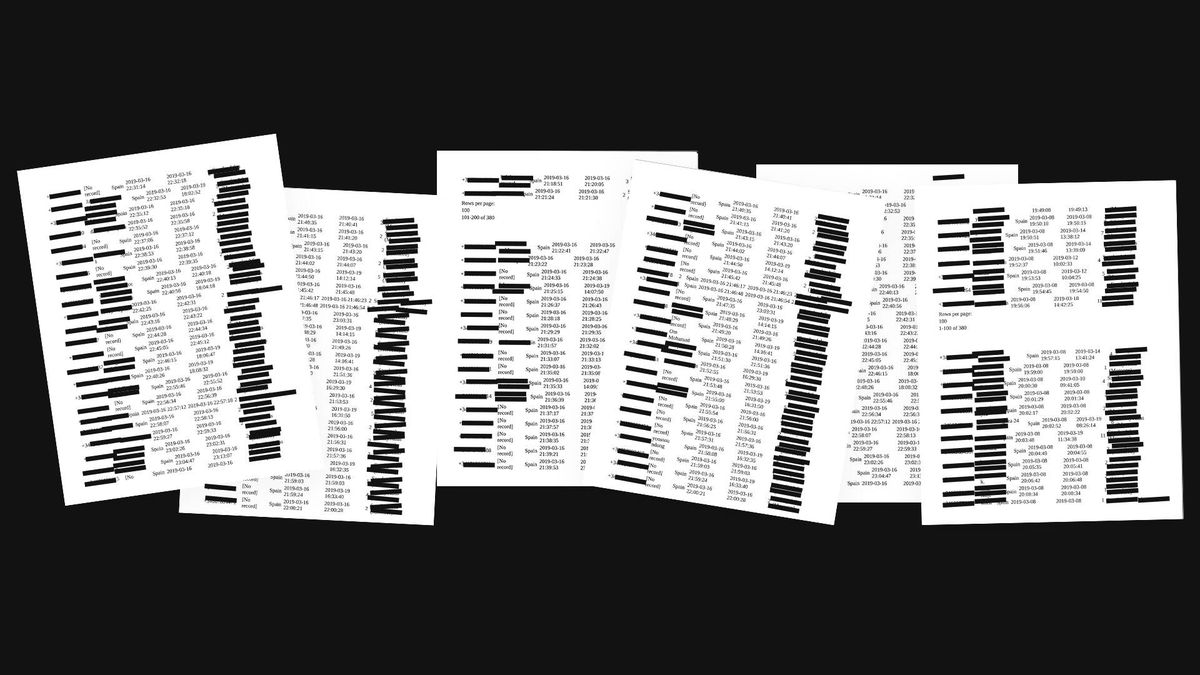
Documents prove that the espionage campaign culminated in 2021, when the Spanish government reversed its foreign policy amid Moroccan threats to launch an invasion of Spanish territory by illegal African migrants. During just thirteen months in 2018-19, it’s now known from previously secret documents leaked this week, the Moroccan spies made 768 cyberattacks targeting 250 Spanish mobile phone numbers.
Among prominent Spanish targets the following have definitely been identified:
- Alberto Aguilera, a colonel in the Guardia Civil, who was chief of intelligence in Catalonia.
- Fernando Marlaska, Spanish Interior Minister since 2018, responsible for the police and security services.
- Luis Planas, long-serving Minister of Agriculture in the Sánchez government since 2018, who has presided over the long-term betrayal of Spanish farmers.
- Margarita Robles, another long-serving member of the Sánchez government, who has been Minister of Defence since 2018, having been security minister in the previous socialist governments of Felipe González.
- Pedro Sánchez himself, Prime Minister since 2018, who has been at the centre of multiple scandals (some involving his wife as well as his government ministers) but has somehow managed to cling on to power and increasingly favours Moroccan diplomatic and business interests.
At the time when security of his colleagues was compromised, the minister responsible for these lapses was Felix Bolaños, then Secretary General of the Spanish Prime Minister’s Office, and now as Justice Minister responsible for the ‘Democratic Memory Law’ that tries to brainwash Spaniards with a politically slanted version of history, criminalising Spanish patriots.

At precisely this time in 2021 when the espionage campaign reached its height, the young Spanish activist Isabel Peralta (European correspondent of Heritage & Destiny and affiliated with a succession of nationalist and national socialist groups in Spain and across Europe) gave a sensational speech outside the Moroccan Embassy in Madrid, when she accused Moroccan and Spanish politicians of being party to a betrayal of her country and of the broader European cause.
A prominent Moroccan lobbyist – Mohammed Chaib Akhdim – quickly mobilised a member of his staff to file a complaint with the political branch of the Spanish police force. This is established by legal documents that we have previously analysed in articles on this website and at Heritage and Destiny.
The outcome of this Moroccan lobbying was that Isabel Peralta was prosecuted and given a 12 month jail sentence. This conviction and sentence is presently subject to appeal, and will if necessary be appealed to the highest level.
This week’s revelations prove beyond doubt that Isabel was fully justified in her accusations against the political elite of Spain and Morocco. Moreover, the entire affair was facilitated by an Israeli cyber espionage firm, manufacturers of spyware known as Pegasus, which was used by the Moroccan intelligence service against numerous targets, especially in Spain.

A former officer of that Moroccan spy agency (the DGST) has now broken ranks and revealed a large part of the story. Spanish investigating judge José Luis Calama twice opened investigations into this Moroccan spying but each time he was frustrated by the refusal of the Israelis to cooperate. Now that a Moroccan whistleblower has provided crucial evidence, it seems inevitable that the investigation will be reopened a third time.
We now know that Morocco’s DGST bought the Israeli product after several years of experimenting with other forms of cyber espionage, at first targeting their own political dissidents, then moving on to higher level targets in Spain, France and elsewhere.
In 2016-17 DGST agents bought about fifty of the then-fashionable Samsung Galaxy S6 Edge phones and infected them with spyware, in those days purchased from an Italian company called Hacking Team. They then supplied these infected phones to shops in a region known for anti-government activism, and dozens of them were sold at low prices to organisers of opposition demonstrations.
As with many early forms of cyber espionage, there were some crude technical drawbacks: for example, the spyware sometimes drained or damaged the phone batteries.
In the autumn of 2017, the Moroccans switched to a more advanced form of cyber espionage by entering a contract with the Israeli manufacturers of a new and at the time revolutionary spyware known as Pegasus. (Older readers will remember that in the 1990s one of the earliest email programs was also called Pegasus, but there is no connection between that and the much later Israeli spyware.)

One advantage of Pegasus spyware is that it was designed to be very easy for intelligence officers to use, via a simple interface that in addition to monitoring communications allowed them to turn the target’s phone into a recording device. This meant that Moroccan agents needed only a minimum of training before being able to spy on both domestic dissidents and foreign politicians.
The DGST’s spyware department is directed by Abdeljalil Taki – who with supreme chutzpah also acted as a Moroccan delegate to the Council of Europe’s Cybercrime Convention Committee!
Due to the political and diplomatic sensitivity of these operations, it’s believed that they were ultimately controlled by King Mohammed VI’s most powerful advisor on foreign affairs and intelligence matters – Fouad Ali el Himma, head of the ultra-secret ‘Bureau 21’ in the Moroccan capital Rabat.
Perhaps the most telling circumstantial evidence of the Moroccans having obtained valuable blackmail material against political targets is that since the 2017-21 period when the use of Pegasus spyware was at its height, both Spain and France have changed their policies in a pro-Moroccan direction.
Despite knowing that he had been targeted himself by the Moroccan-Israeli spyware (as had his Justice Minister and Defence Minister as well as senior police and security chiefs), Pedro Sánchez has made no complaint either to Morocco or to Israel.

In November 2025 Spain’s Justice Minister Fernando Marlaska even gave an illustrious Spanish decoration – the Grand Cross of the Order of Civil Merit – to Abdellatif Hammouchi, the head of the DGST that had spied on Marlaska and others! In a further humiliation, earlier this month the Civil Guard intelligence chief Gen. Luis Peláez was sent to Morocco to give Spanish awards to other senior DGST officers who were part of a large-scale operation that had spied on the Civil Guard itself!
Another curious aspect is that the Kingdom of Morocco has close relations not only with Israel (hence their use of Israeli espionage software) but also with Vladimir Putin’s Russia. In 2016, while preparing to work with Israeli technology to spy on Western European governments, Morocco signed an agreement with Russia to cooperate on military and intelligence matters.
This cooperation has extended since Putin’s invasion of Ukraine. Defying European sanctions, Morocco has become one of the Kremlin’s most important business partners. Morocco imports oil from Russia, and also exports oil to Spain.
If it were found that Sánchez and his Moroccan friends had connived at evading oil sanctions, to the benefit of the Kremlin, this would be a serious betrayal of Europe. The Spanish government’s failed immigration policy is already a betrayal not only of Spaniards but of all Europeans; if Sánchez (via Morocco) is indirectly aiding the neo-Stalinist war machine, his disgusting record of treachery would be compounded.
One of the simplest tasks that the Spanish judicial system can do immediately to begin to redress this scandal is to quash the unjust conviction of Isabel Peralta, who was given a 12-month prison sentence for daring to tell the truth. Another aspect of this story that seems especially outrageous is that a lawyer with secret ‘anti-fascist’ affiliations – Armando Rodriguez Pérez – infiltrated Isabel’s political movement and her legal team, and to this day he has a shadowy and subversive role behind the scenes in Spanish nationalist circles.
How much do Spain’s security services know about the role of Moroccan and Israeli agents in Spanish affairs? When will the authorities in Madrid act in the interests of Spain, rather than the commercial and diplomatic interests of foreign powers and the long-term anti-European interests of ‘anti-fascism’ and globalist capitalism?

